
Did you know? Water and microbial contamination in diesel fuel is one of the main causes of premature failures in injection systems, potentially leading to repair costs far exceeding those of preventive maintenance.
Key Indicators of Fuel Contamination
Indicator 1: Excessive or unusually colored smoke in the exhaust
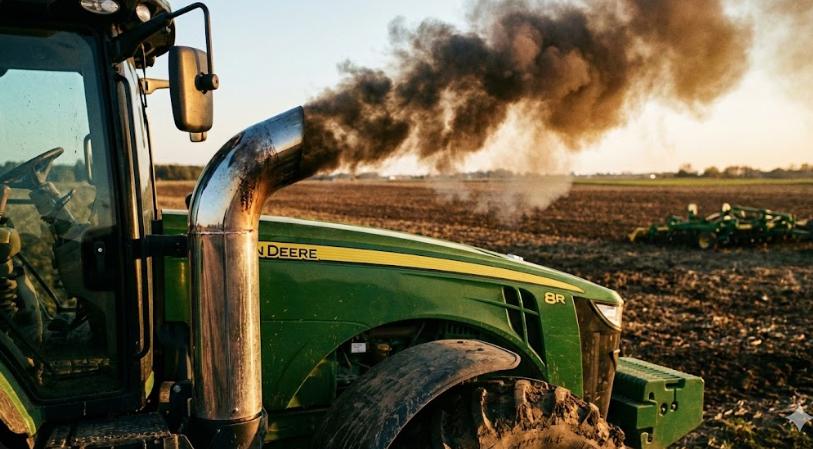
Excessive exhaust smoke may indicate incomplete combustion due to pollution.
One of the first visible signs that something is wrong is the smoke coming from the engine’s exhaust. If you notice smoke that is denser than usual, or black, white, or bluish in color, it may indicate that the fuel is not burning correctly due to contamination. Impurities such as water or sediment disrupt combustion, generating black smoke from unburned fuel or white smoke from water vaporization.
How to proceed? First, inspect the injection system and check the fuel quality. Drain the water separators, change the filters if they are clogged, and consider using combustion-enhancing additives. If the contamination is severe, drain the tank and refill with filtered or treated diesel.
Indicator 2: Loss of engine power and performance
Another clear warning sign is when the engine stops delivering its usual power: poor acceleration, difficulty climbing hills, and increased fuel consumption. This happens because impurities clog filters or damage injectors, leaning out the fuel mixture and forcing the engine to work harder.What can you do? Change the fuel filter if it’s saturated, check for water in the separator, and clean or repair the injectors and pumps if necessary. Also, implement a preventive fuel maintenance program (regular filtration, stabilizer additives). By correcting the cause, the engine will regain its normal performance.
Indicator 3: Difficulty starting and rough running
 An engine that doesn’t start easily may be suffering from contaminated fuel.
If you notice that your engine has difficulty starting (especially when cold), or that its running is rough—vibrations at idle, jerking, or unexpected stalling—it could be due to contaminated fuel. Water and sediment affect fuel flow and atomization, resulting in inefficient combustion.
An engine that doesn’t start easily may be suffering from contaminated fuel.
If you notice that your engine has difficulty starting (especially when cold), or that its running is rough—vibrations at idle, jerking, or unexpected stalling—it could be due to contaminated fuel. Water and sediment affect fuel flow and atomization, resulting in inefficient combustion.
Solution: Purge the system, especially the water separator or filters, replace old filters, and clean the pump and injectors. For moisture, an antifreeze additive or cetane improver can be used, although the definitive measure is to eliminate the contamination: drain the tank if necessary and fill with clean fuel.
Indicator 4: Fuel filters clogged or full of sediment
When filters become saturated or clogged very quickly, or when removed they appear dirty, discolored, or have deposits, this is a very clear sign that the fuel contains sediment, microorganisms, or water. These contaminants accumulate and reduce fuel flow.What to do? Check the filters frequently. If the blockage is recurring, simply changing the filter isn’t enough: clean the tank, lines, pumps, and injectors to remove any remaining contaminants. Also consider having a fuel sample analyzed (visible particles, separated water). In the long run, installing filtration systems in the tanks or purifiers helps capture sediment and water before they reach the engine.
Indicator 5: Cloudy, discolored, or strange-smelling fuel
Finally, a simple visual or olfactory check can reveal contamination: good diesel should be translucent and light amber in color. If it is cloudy, has a milky or khaki hue, contains sediment, or smells different (for example, like “rotten eggs” due to bacteria), it is very likely contaminated.
How to proceed: Perform a routine inspection before each tanker load. If you detect cloudiness or a foul odor, do not use that fuel. Then, filter or discard that batch. For biological contamination, a specific biocide can be applied. But the best option is to purify or replace the fuel: use advanced filtration equipment or refuel with new, reputable fuel.
How we at Gigonsa support
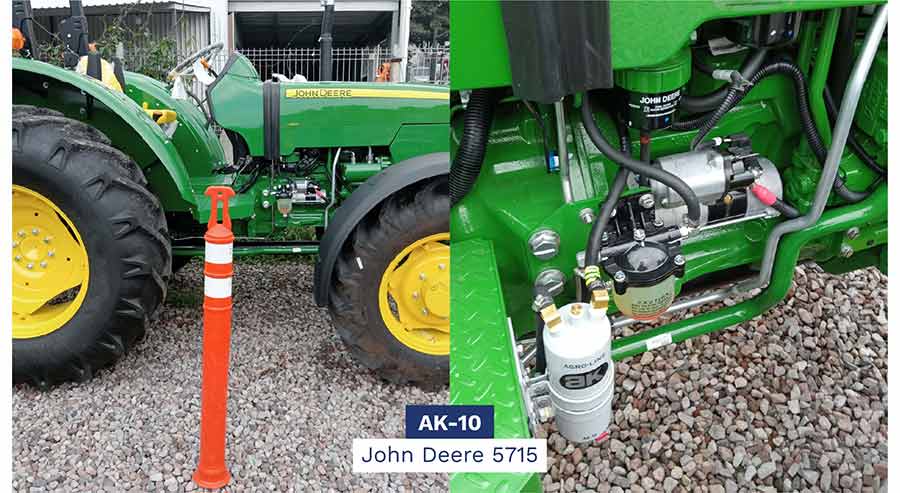
Technological solution: AK Purifier by Gigonsa.
At Gigonsa, we understand that detecting these five indicators is the first step; the second is having a robust solution. That’s why we offer the AK Purifier line of purifiers, developed by our company, designed to remove up to 99% of water and sediment from fuel, protect injection systems, reduce emissions, and extend engine life. With over 30 years of experience and a presence in more than 25 countries, we act as a technical partner for the agricultural, transportation, mining, maritime, service station, and industrial sectors.
With AK Purifier’s Classic, Premium, and Agricultural lines, we offer solutions tailored to different operating conditions, with free maintenance, extended warranty, and technical support 365 days a year. This way, you not only correct detected contamination but also implement an effective preventative strategy to ensure those five indicators never again affect your operations.
Good Practices to Avoid Pollution
To conclude this comprehensive analysis, here are some best practices to always follow:
- Proper Storage: Store fuel in appropriate, well-sealed tanks in cool, dry locations. Studies show that humidity and time are critical factors in water ingress or microbial growth in fuel.
- Periodic sampling: Carry out periodic sampling of the stored fuel (clarity, presence of water, sediments).
- Continuous Filtration: Implement continuous and preventative filtration from the source to the engine: the sooner contaminants are intercepted, the less damage there is to the fuel system.
- Separator Check: Check the water separators regularly and empty them when necessary.
- Avoid prolonged storage: Avoid leaving fuel stored for long periods without treatment: diesel is estimated to begin degrading much faster than commonly believed.
- Staff Training: Train operating personnel on warning signs, maintenance procedures, and technical purification equipment.
| Indicator | Causa Probable | Immediate Action | Long-Term Solution |
|---|---|---|---|
| Excessive smoke | Water/sediments in combustion | Drain separator, change filters | Instalar purificador AK Purifier |
| Power loss | Clogged filters, damaged injectors | Review and change filters | Scheduled preventive maintenance |
| Startup difficulty | Humidity in the system | Purge system, use additives | Continuous filtration with water separator |
| Clogging filters | Sediments/microbes in tank | Deep system cleaning | Fuel analysis and filtration at source |
| Cloudy fuel/bad smell | Biological or chemical contamination | Do not use, filter, or discard batch | Biocides and certified quality tanks |
In summary, if you notice any of the five symptoms we’ve described: abnormal smoke, loss of power, difficulty starting, clogged filters, or cloudy/foul-smelling fuel… act immediately. Early detection makes the difference between simple maintenance and a costly breakdown.
At Gigonsa, we’re here to support you with technological solutions like AK Purifier, as well as specialized consulting and technical service. Protect your investment, minimize downtime, and ensure your motors operate at peak performance.
You can also become a distributor or follow us on LinkedIn, Instagram and YouTube.