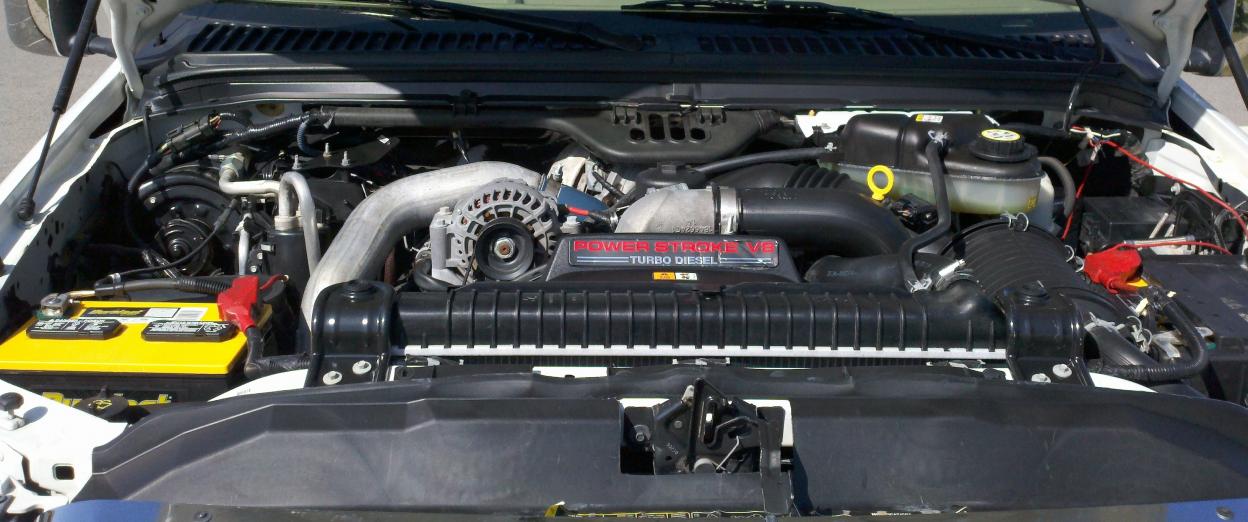
If you mention the 6.0L Powerstroke in a crowded room of diesel enthusiasts, you will likely get two reactions: a cringe from former owners who faced repair bills, or a nod of respect from those who cracked the code.
Let’s break the myth immediately
The 6.0L is not a “bad engine.” It is a high-performance racehorse that was forced to act like a mule. Developed during the transition into the strict Navistar/Ford emissions era, this engine introduced advanced technology that required specific engineering care. If you treat it like an old-school 7.3L (ignoring maintenance until it breaks), it will fail. But if you understand the physics behind its operation, it can be one of the most capable platforms on the road.
This is not a generic maintenance list. This is a forensic analysis of why the 6.0L fails and how to engineer it for the long haul.
The Anatomy of the 6.0L Powerstroke: Technical Specifications
To understand the pathology of the engine, we must first understand its physiology. The 6.0L abandoned the massive displacement of its predecessor for higher revolutions and variable geometry turbocharging.
 Precision engineering requires precision maintenance.
Performance Benchmarks: Horsepower vs. Torque (Stock)
Out of the box, the 6.0L was a beast for its time.
- Horsepower: 325 hp @ 3,300 RPM
- Torque: 560-570 lb-ft @ 2,000 RPM
- Displacement: 365 cubic inches (6.0 Liters)
- Configuration: V8, OHV (Overhead Valve), 4 valves per cylinder
The HEUI System: How High-Pressure Oil Drives Combustion
The heart of the 6.0L is the HEUI system (Hydraulic Electronic Unit Injection). Unlike modern Common Rail systems that pressurize fuel directly, HEUI uses engine oil to pressurize the fuel.
A High-Pressure Oil Pump (HPOP) pressurizes engine oil up to 3,000+ PSI. When the computer commands an injection, this oil pushes down on an intensifier piston inside the injector, multiplying the pressure of the fuel to over 26,000 PSI. This means your engine oil isn’t just a lubricant; it is a hydraulic fluid essential for combustion. If your oil degrades, your engine doesn’t just wear out—it shuts down.
Year-by-Year Changes (2003 vs. 2005+): Oil Pump and HPOP Evolutions
Not all 6.0Ls are created equal. The 2003-2004 models utilized a swash-plate style HPOP, known for being finicky. In 2005, Ford switched to a V4-style high-pressure pump. While the later pumps are generally more robust, the “snap-to-connect” (STC) fitting on the 2005+ models became a notorious failure point, prone to cracking and causing “hot start” issues due to internal oil leaks.
The 6.0 Powerstroke “Failure Cycle”: A Forensic Analysis
Why do these engines fail? It is rarely a single event. It is a domino effect. By understanding the chain reaction, we can intervene before a catastrophic failure occurs.
The Cooling System Chain Reaction: From Casting Sand to Clogged Oil Coolers
The root cause of the infamous “blown head gasket” is often not the gasket itself—it’s sand. During the manufacturing process, residual casting sand was often left inside the engine block. Over time, this sand migrates through the coolant and settles in the finest filter available in the system: the oil cooler.
As the oil cooler clogs, it restricts coolant flow. The oil temperature spikes, degrading the oil’s ability to lubricate and act as a hydraulic fluid. This leads to the next, more violent failure.
EGR Cooler Rupture: How Thermal Stress Stretches Factory Head Bolts
The coolant flows from the oil cooler directly into the EGR (Exhaust Gas Recirculation) cooler. When the oil cooler clogs, the EGR cooler is starved of coolant. Meanwhile, superheated exhaust gas (1000°F+) is still rushing through it.
The EGR cooler eventually cracks internally due to thermal stress. Coolant leaks into the intake manifold and enters the cylinders. Since liquid cannot be compressed, cylinder pressures skyrocket. The factory TTY (Torque-to-Yield) head bolts stretch under this immense pressure, lifting the cylinder head and blowing the head gasket.
The Molecular Science of Stiction: Why HEUI Injectors Fail in Cold Weather
“Stiction” (Static Friction) is the silent killer of the 6.0L. Inside the top of the injector is a spool valve that moves back and forth to direct the high-pressure oil. The clearance here is measured in microns.
Because the HPOP shears the oil molecules at such high pressure, standard oil breaks down quickly, leaving a varnish or lacquer on these spool valves. When cold, this varnish acts like glue. The valve sticks, the injector doesn’t fire, and you get rough idling and smoke until the engine warms up. This is physics, not bad luck.
Maximizing Longevity: What Does “Bulletproofing” Really Mean?
“Bulletproofing” is a marketing term, but it relies on sound engineering principles. It involves replacing the factory weak points with parts designed to handle the thermal and hydraulic loads the engine produces.
The 5 Pillars of a Reliable 6.0 Powerstroke Motor
To stabilize a 6.0L, you generally need to address these five areas:
- ARP Head Studs: Replacing stretch-prone bolts with high-tensile steel studs.
- Upgraded Oil Cooler: A unit with larger passageways to prevent clogging.
- EGR Solution: An upgraded, tube-style cooler (which resists cracking) or a delete kit (where legal).
- Coolant Filtration: A bypass filter to catch the casting sand before it hits the oil cooler.
- FICM Tuning: Ensuring the Fuel Injection Control Module maintains voltage.
| Component | Factory Part Issue | Bulletproof Upgrade | Performance Benefit |
|---|---|---|---|
| Head Bolts | Stretch under high pressure | ARP Head Studs | Clamping force increases from ~170k psi to 220k+ psi. |
| Oil Cooler | Narrow passages trap sand | Remote/High-Flow Cooler | ΔT stays within 15°F; prevents EGR failure. |
| Water Pump | Plastic impeller breaks | Billet Metal Impeller | Consistent coolant flow; no cavitation damage. |
Beyond the Basics: The Role of Fuel Hydraulic Integrity
While head studs get all the glory, hydraulic integrity keeps the truck running. This means ensuring your HPOP is healthy and your standpipes and dummy plugs (internal high-pressure oil rails) are updated to the newer Teflon-washer designs to prevent internal leaks.
Expected Lifespan: Can a 6.0L reach 400,000 miles?
Absolutely. We see fleets running 6.0L engines past 400,000 miles routinely. The secret isn’t luck; it’s proactive monitoring. If you wait for the “Check Engine” light, it’s too late.
The Hidden Enemy: Fuel Contamination and Injector Erosion
Most 6.0L guides stop at oil and coolant. However, at Gigonsa, we know that fuel quality is the silent assassin of the HEUI system.
Why the HFCM (Horizontal Fuel Conditioning Module) Isn’t Enough
The factory HFCM is located on the frame rail. It combines a fuel pump and a water separator. While the design was adequate for 2003 standards, it struggles with modern diesel quality and the bio-diesel blends often found at pumps today. The factory drain plug is notoriously difficult to access, leading many owners to skip the vital monthly water drain.
The Impact of Water and “Diesel Bug” on HEUI Spool Valves
Water is catastrophic for a 6.0L. When water hits the tip of an injector operating at combustion temperatures, it flashes into steam, expanding rapidly and potentially blowing the injector tip off. Furthermore, water lowers the lubricity of the fuel, scoring the barrel and plunger of the injector.
This environment also breeds the “Diesel Bug”—microbial growth that forms a sludge. This sludge passes through standard paper filters when under pressure, coating the expensive spool valves and ruining the injector sets you just paid thousands to replace.
Centrifugal Purification: Protecting High-Pressure Oil Systems from the Fuel Side
To truly protect the HEUI system, you must remove 99% of free water and particulates before they reach the HFCM. This is where barrier filtration (paper filters) often fails—they clog and go into bypass mode.
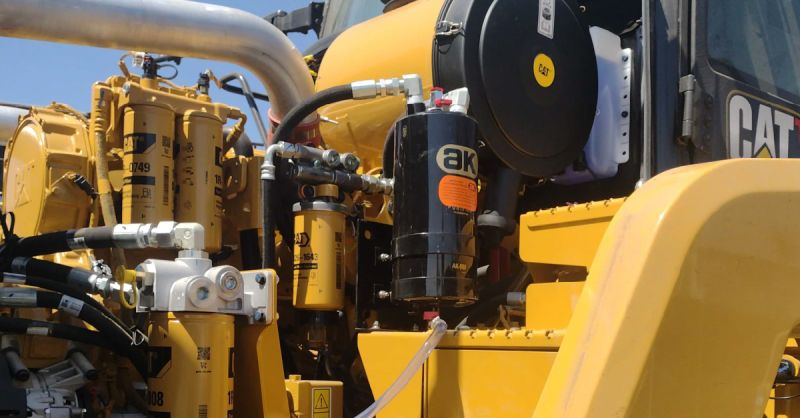
This is why we advocate for Centrifugal Purification. Unlike traditional filters that trap dirt in a medium, our AK Purifier technology uses the velocity of the fuel to spin contaminants and water out of the diesel stream. By separating water at the molecular level through centrifugal force, you ensure that the fluid entering your expensive injectors is pure diesel, maintaining the hydraulic integrity required for the HEUI system to function.
Read More: Dive deeper into the science of filtration in our article: Centrifugal Filtration vs. Traditional Filters to understand why the AK Purifier is the final step in 6.0L reliability.
Maintenance & Diagnostics: Interpreting the Engine’s Vital Signs
Owning a 6.0L requires you to be part mechanic, part data analyst. You cannot rely on the dashboard gauges; they are “dummy lights” that react too slowly.
Digital Monitoring: Delta Temps (Oil vs. Coolant) and FICM Voltage
You must utilize a digital monitor. The most critical metric to watch is the Delta Temperature (ΔT).
Once the engine is fully warmed up (driving at 65mph), your Oil Temperature should not exceed your Coolant Temperature by more than 15°F. If your coolant is 195°F and your oil hits 212°F, your oil cooler is clogged.
FICM Voltage Health Table:
| Voltage Reading | Diagnosis | Action Required |
|---|---|---|
| 48.0V – 49.5V | Excellent | Normal Operation |
| 45.0V – 47.9V | Warning Zone | Monitor closely; check batteries |
| < 45.0V | Critical Failure | Repair/Replace FICM immediately to save injectors |
Diagnostic Tool Hierarchy: From BlueDriver to Edge Insight CTS3
- Tier 1 (Basic): BlueDriver / Smartphone Apps. Good for reading codes, but slow refresh rates.
- Tier 2 (Prosumer): Edge Insight CTS3. The gold standard. Live monitoring of EGTs, Boost, and Delta Temps with audible alarms.
- Tier 3 (Shop Level): Ford IDS / AutoEnginuity. Required for running cylinder contribution tests and injector buzz tests.
DIY vs. Professional Shop: Complexity Map of Common Repairs
- Low Complexity (DIY Friendly): Oil change, Fuel filter change (Upper & Lower), Blue Spring Upgrade.
- Medium Complexity: EGR Valve cleaning, Alternator replacement, Coolant Flush.
- High Complexity (Pro Shop Recommended): Oil Cooler replacement, Head Gaskets (Cab-off procedure usually required), High-Pressure Oil Pump replacement.
Remanufacturing vs. Rebuilding: Making the Right Investment
If your 6.0L has suffered catastrophic failure, you face a choice: a local rebuild or a professional remanufacture. They are not the same.
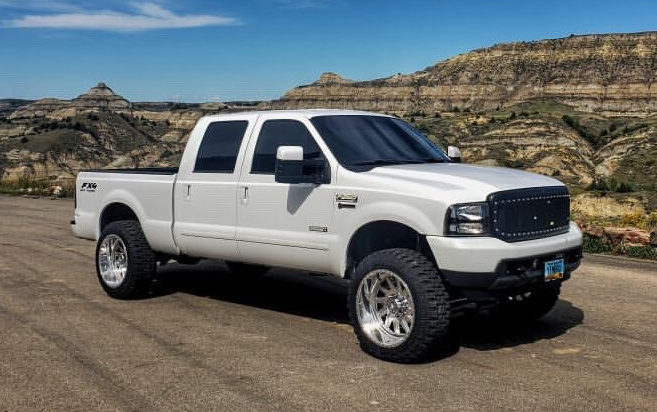 With proper investment, your 6.0L can outlast modern trucks.
Torque Plate Honing and CNC Machining: The Gold Standard
A local machine shop might just bore the cylinders. A true remanufacturer uses Torque Plate Honing. This process involves bolting a heavy metal plate to the block to simulate the stress and distortion of the cylinder head before machining the cylinders. This ensures that when you install the head, the cylinders remain perfectly round, reducing blow-by and oil consumption.
What is an “Engine Birth Certificate”?
Never buy a remanufactured engine without documentation. Top-tier builders provide a “Birth Certificate” verifying the deck flatness, cylinder bore taper, and crank runout. This transparency is the difference between a 50,000-mile engine and a 400,000-mile engine.
Cost Analysis: ROI of a Remanufactured 6.0L vs. Purchasing a New Truck
A proper bulletproofing or remanufactured engine might cost $10,000 to $15,000. However, a new diesel truck averages over $85,000 in 2026.
If your 6.0L chassis is rust-free, investing in the engine offers a significantly higher ROI than taking on a new truck payment, especially since pre-2007 trucks lack the complex DPF and DEF systems that plague modern diesels.
Frequently Asked Questions
Is the 6.0 Powerstroke a good engine after bulletproofing?
Yes. Once the factory shortcomings (head bolts, EGR cooler, oil cooler) are addressed, the 6.0L is arguably one of the most durable and powerful engines available, capable of handling high mileage and heavy towing without the emissions complexity of newer trucks.
What is the average cost to bulletproof a 6.0 Powerstroke?
The cost varies by shop and scope, but generally ranges between $4,500 and $7,000. This usually includes ARP head studs, head gasket replacement, oil cooler, and EGR upgrades. Doing it preventively is cheaper than waiting for failure.
Why does my 6.0 Powerstroke have a hard start when cold?
This is usually caused by “Stiction” in the injectors or a failing FICM. It can also be a sign of a high-pressure oil leak (dummy plugs/standpipes) where the system cannot build the required 500 PSI to fire the injectors until the oil thickens or the RPMs increase.
How often should I change the oil and fuel filters?
Due to the shearing effect of the HEUI system on oil, you must change the oil every 5,000 miles (never exceed this). Fuel filters should be changed every 10,000 miles (every other oil change). Draining the water separator should be done monthly.
Ready to protect your investment?
The 6.0L Powerstroke requires clean, water-free fuel to keep its hydraulic injectors firing correctly. Contact the Gigonsa team today to learn which AK Purifier model fits your truck or fleet, and stop injector failure before it starts.
Contact Gigonsa TeamRelated Articles
Understand the difference in technology and why traditional filters might fail your engine.
Read More
Learn to spot the early warning signs of bad diesel before it destroys your injectors.
Read More
Discover why water is catastrophic for modern diesel engines like the 6.0 Powerstroke.
Read More