
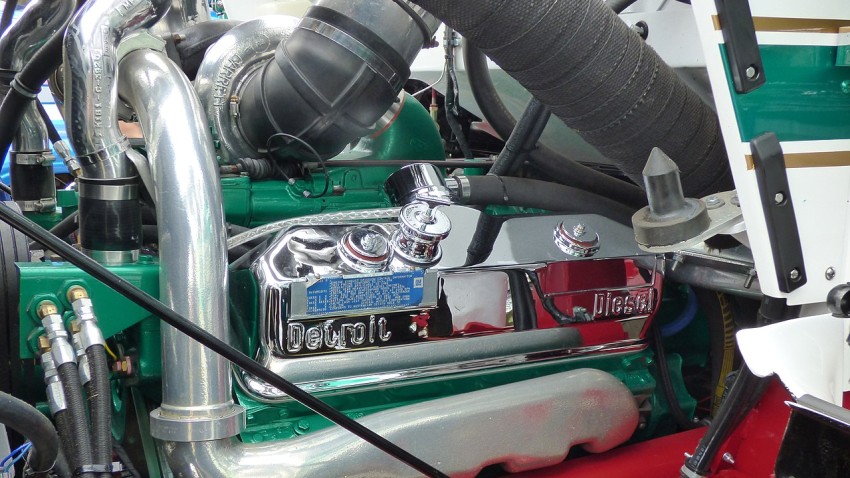
Engineering Immortality: The Detroit Diesel Series 60 Guide to the Next Million Miles
In the pantheon of heavy-duty diesel engineering, few engines command the reverence of the Detroit Diesel Series 60. When it was introduced in 1987, it didn’t just replace the noisy, oil-leaking two-strokes of the past; it dragged the entire trucking industry into the digital age. It was the first fully integrated electronic heavy-duty diesel engine, a title that earned it a reputation for reliability that borders on the mythical.
At Gigonsa, we see thousands of engines pass through the hands of our clients—from agricultural giants to long-haul fleets. Yet, even decades after its production ceased in 2011, the Series 60 (specifically the pre-EGR 12.7L) remains the “gold standard” for operators who value simplicity over complexity.
However, owning a legend isn’t enough. The cast-iron block may be bulletproof, but the ancillary systems—specifically the high-pressure fuel injection and the DDEC electronics—are vulnerable to what we call “death by a thousand cuts.” Microscopic particulates, entrained air, and thermal stress are silently eroding the lifespan of these engines.
This is not a basic maintenance checklist. This is an engineering-level deep dive into the physics of Fuel Hydrodynamics, the logic of the DDEC system, and the diagnostic truths that most manuals miss. If you want your Series 60 to run for another million miles, you need to understand it at a molecular level.
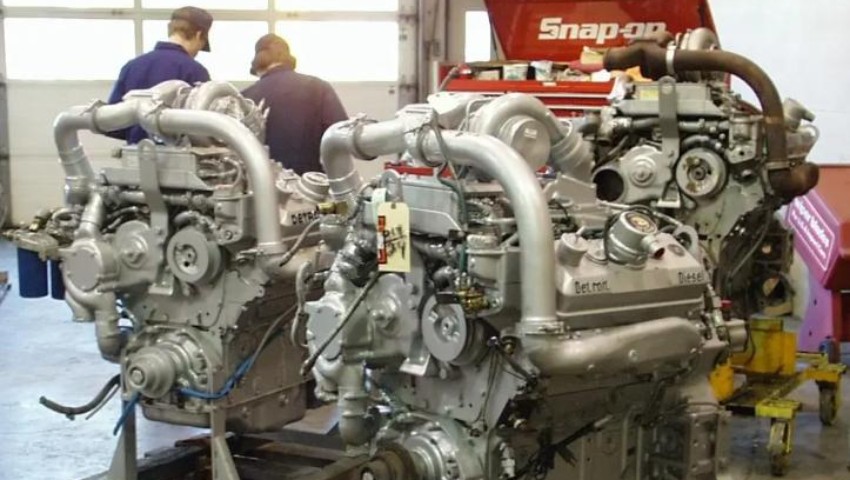
The robust cast-iron block of a Series 60 engine. Its longevity depends on protecting its sensitive fuel and electronic systems.
Core Insight: The Vulnerability is in the Fluid
The Series 60’s legendary durability can be compromised not by major mechanical failure, but by the silent degradation caused by poor fuel quality. Contaminants and air in the fuel system act as “micro-grenades,” eroding injectors and overheating electronics from within. Advanced fuel purification isn’t just an add-on; it’s a critical engineering countermeasure.
The Brain of the Beast: Decoding DDEC Generations
To diagnose a Series 60 correctly, you must first understand the silicon brain controlling the iron muscle. The Detroit Diesel Electronic Control (DDEC) system evolved rapidly, and mixing up generations is a common source of parts confusion and poor performance tuning.
Unlike mechanical engines where timing was fixed by gear trains, the DDEC system uses a solenoid-operated Electronic Unit Injector (EUI). The ECM (Engine Control Module) determines the precise moment and duration of fuel injection based on inputs from sensors like the TRS (Timing Reference Sensor) and SRS (Synchronous Reference Sensor).
DDEC III vs. DDEC IV: The “Holy Grail” Debate
In the world of performance tuning and reliability, the DDEC IV (1997–2002) is often considered the pinnacle of the platform. While physically similar to its predecessor, the DDEC IV represented a quantum leap in processing power.
- Memory & Speed: The DDEC IV ECM featured a 50% faster processor and 57% more memory than the DDEC III. This allowed for more granular control over injection mapping, resulting in sharper throttle response and better fuel economy.
- Tuning Potential: For operators looking to maximize horsepower (up to 500+ HP on a 12.7L), the DDEC IV is the preferred architecture. It can handle aggressive timing advancements that would overwhelm the slower DDEC III.
DDEC V & VI: The Age of Emissions
The introduction of the DDEC V (2003–2006) marked the beginning of the end for the engine’s legendary simplicity. To meet EPA standards, Detroit introduced the Variable Geometry Turbo (VGT) and Exhaust Gas Recirculation (EGR).
While the DDEC V ECM is significantly faster, it is burdened with managing the complex thermal loads of the EGR system. Diagnostic complexity increases here; a code related to “Turbo Boost” on a DDEC V is often actually a symptom of a stuck VGT actuator or a clogged Delta P sensor in the EGR system. Understanding these generational differences is critical—you cannot troubleshoot a DDEC V using DDEC IV logic.
The Hidden Killer: Fuel Aeration and Injector Cavitation
At Gigonsa, our core expertise lies in Fuel Hydrodynamics. Most mechanics treat the fuel system as simple plumbing—pipes moving liquid from Tank A to Engine B. This oversimplification is the primary cause of premature injector failure in the Series 60.
The Series 60 EUI system pressurizes fuel to over 28,000 PSI inside the injector body. This extreme pressure creates a violent environment where the physics of fluids changes.
The Physics of EUI Injectors
When diesel fuel containing entrained air (bubbles) or emulsified water enters the high-pressure chamber of an EUI injector, it undergoes rapid compression. As the plunger descends, these bubbles collapse. This is not a gentle “pop”; it is a violent implosion known as cavitation.
Research by the SAE (Society of Automotive Engineers) has demonstrated that the shockwaves from these collapsing bubbles generate localized temperatures and pressures high enough to erode hardened steel. This is why we often hear mechanics describe injector damage as looking like it was cut with a “plasma cutter”.
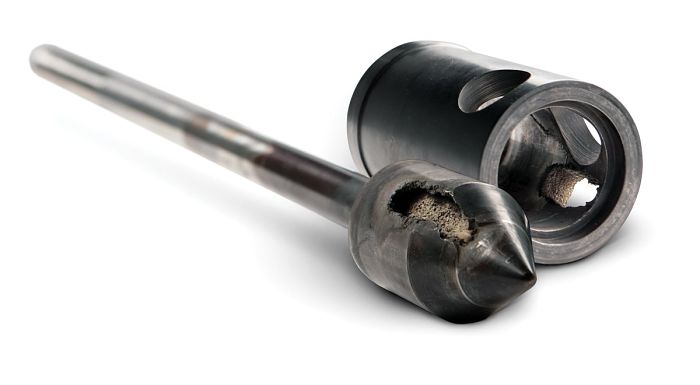
Precision inspection of a diesel injector. Cavitation damage is often invisible until performance severely degrades.
Symptoms of Cavitation
How do you know if your Series 60 is suffering from cavitation?
- Black Smoke under Load: Erosion of the needle seat disrupts the spray pattern, leading to poor atomization and incomplete combustion.
- Rough Idle: As internal tolerances widen, the ECM struggles to balance cylinder fueling.
- Fuel in Oil: Eventually, the tip can erode completely, dumping raw fuel into the cylinder and washing down the liner walls.
The Solution: Advanced Fuel Hygiene
Standard paper filters are insufficient. They may catch large rocks, but they often fail to remove entrained air and emulsified water, the precursors to cavitation.
This is where Fuel Hygiene becomes an engineering discipline rather than a maintenance chore. To protect the EUI system, you must remove the air before it reaches the fuel gallery. This explains the popularity of aftermarket air separation systems (like FASS or AirDog) among Series 60 enthusiasts. However, separation is only half the battle; removal of water and solids at the microscopic level is the domain of AK Purifier. By utilizing centrifugal force rather than restrictive paper media, we ensure that the fuel entering your gallery is a pure liquid, devoid of the bubbles and droplets that act as “micro-grenades” inside your injectors.
(For a deeper dive on water damage, see our guide: Water: The Worst Enemy of Diesel).
Hard Starts & The Check Valve Mystery
If you browse any heavy-duty diesel forum, the most common cry for help regarding the Series 60 is: “Cranks for 30 seconds before starting after sitting overnight.”
The diagnosis is almost always a loss of fuel prime, but the solution is frequently misunderstood due to confusion about the Fuel Check Valve.
Understanding the Return Loop
The Series 60 relies on a gear-driven mechanical fuel pump. Unlike modern electric pumps, it cannot “prime” the system simply by turning the key. It requires the engine to rotate. If the fuel in the cylinder head gallery drains back to the tank while the truck is parked, the pump must refill the entire head before the injectors can fire.
Locating the Check Valve
There is persistent confusion regarding the location of the check valve responsible for holding this pressure.
- The Myth: Many manuals and older diagrams show a check valve located directly on the back of the cylinder head. On many Freightliner and Kenworth chassis, this area is virtually inaccessible without cutting a hole in the firewall or floor.
- The Reality: In many setups, especially later 12.7L and 14L models, the critical check valve is actually located in the return line distribution block or just before the line enters the fuel tank. It acts as a restrictor to maintain roughly 60–70 PSI in the rail during operation and seals the system when stopped.
Diagnostic Steps
Before you replace the expensive mechanical fuel pump, perform this diagnostic tree:
- The Sight Glass Test: Install a clear hose on the return line. Run the engine. If you see a stream of bubbles (“champagne”), you have suction side aeration—air is being pulled in before the pump.
- The Pressure Decay Test: Install a gauge on the secondary filter housing. Run the engine, then shut it off. The pressure should remain positive. If it drops to 0 PSI instantly, your check valve is stuck open.
The “Cooling Plate” Effect: Protecting the ECM
Here is a component that 90% of operators ignore until it kills their ECM: the DDEC Cooling Plate.
How Fuel Cools the Computer
Electronics hate heat. To keep the DDEC ECM cool, Detroit engineers designed a cooling plate bolted to the back of the module. Fuel from the transfer pump flows through this plate before it reaches the secondary filters and the engine. It’s a brilliant design, utilizing the thermal mass of the diesel fuel as a heat sink.
The Silent Clog
The problem arises because this cooling plate acts as a sediment trap. Since it is located on the suction side or intermediate pressure side (depending on plumbing), it often accumulates “sludge,” algae, and rubber deterioration from old fuel lines.
Symptoms of a Clogged Cooling Plate:
- Intermittent Shutdowns: The ECM overheats and shuts down to protect itself, usually under heavy load or on hot days.
- “Dead Pedal”: The throttle response becomes erratic as the electronics thermally throttle.
- No Codes: Often, this issue throws no specific fault code, leading mechanics to replace perfectly good sensors.
Prevention
The only way to protect the cooling plate is to ensure the fuel is pristine before it leaves the tank. Standard primary filters can bypass when clogged or under high vacuum. A purification system that removes contaminants continuously—like the AK Purifier—ensures that the fuel flowing through your expensive ECM is clean enough to act as a coolant, preventing the formation of the insulating sludge layer that cooks the electronics.
(Learn more about our sediment removal technology in: Centrifugal Filtration vs. Traditional Filters).
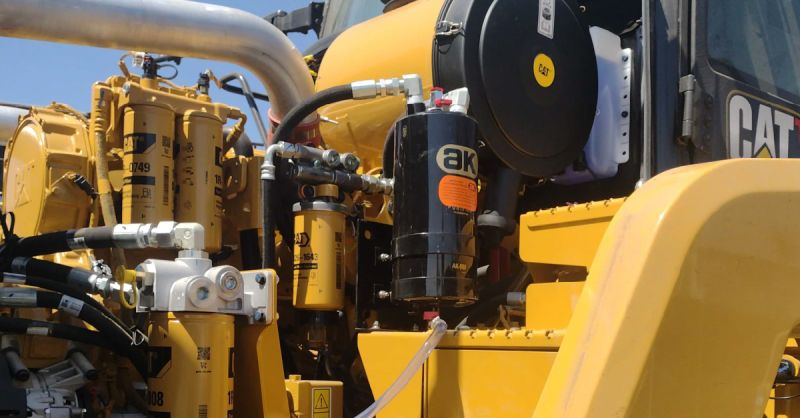
Advanced filtration components are key to preventing silent failures like ECM overheating and injector cavitation.
Advanced Maintenance: ISO 4406 Cleanliness Standards
In the early days of diesel, if the fuel looked clear, it was good. Today, with injection pressures exceeding 28,000 PSI, the human eye is no longer a reliable testing instrument. We must rely on the ISO 4406 Cleanliness Code.
Beyond “Looks Clean”
The tolerances inside a Series 60 EUI injector are measured in microns. For context, a human red blood cell is about 8 microns wide. A particle of silica (sand) that is 4 microns wide can wedge itself between the plunger and barrel of an injector, causing scoring and “stiction”.
Understanding ISO Codes
ISO 4406 uses a three-number system (e.g., 18/16/13) to classify contamination levels of particles >4µm, >6µm, and >14µm per milliliter of fluid.
- Standard Pump Diesel: Often delivers at ISO 22/20/17. This contains millions of damaging particles per tank.
- Target Cleanliness: For the Series 60, Detroit Diesel recommends fuel cleanliness levels significantly lower to prevent premature wear.
Achieving Pure Diesel
Achieving an ISO 18/16/13 or better rating requires more than a standard spin-on filter. Cellulose (paper) filters have a fixed capacity; once they are full, they go into bypass mode, allowing contaminants to flow straight into the engine.
The Gigonsa Approach: By implementing AK Purifier’s centrifugal technology, we separate contaminants based on density rather than particle size. This allows us to remove 99% of solids and water down to the sub-micron level, consistently, without the risk of filter bypass. This effectively “polishes” the fuel before it ever reaches the sensitive high-pressure pump, ensuring that your 12.7L Detroit isn’t slowly grinding itself to death from the inside out.
Diagnostic Fault Codes Cheat Sheet
When the “Check Engine” light (CEL) illuminates, the DDEC is trying to talk to you. While a ProLink or laptop is ideal, you can often retrieve Flash Codes using the diagnostic switch. Here are the critical codes every Series 60 owner must memorize.
| Flash Code | SAE Code (PID/SID) | Description | The Engineer’s Note |
|---|---|---|---|
| 39 | SID 146/147 | EGR Valve / VGT Vane Fault | On DDEC V engines, this is the most common code. It usually means the VGT vanes are stuck due to soot or the EGR valve has failed. |
| 43 | PID 111 | Low Coolant Level | If the tank is full, check the sensor probe for scale buildup. On DDEC IV EGR, a broken wire on the TCI sensor can ghost this code. |
| 44 | PID 110 / 175 | High Temp (Oil/Coolant) | Immediate attention required. Check for cooling plate restriction (ECM heat) or genuine coolant issues. |
| 22 | PID 91 | TPS Circuit Low | Usually a wiring harness issue, not the pedal itself. The harness rubs near the steering column or engine block. |
Note: Flash codes are a “blunt instrument.” For precise diagnostics, especially regarding DDEC V/VI emission systems, viewing the PID/FMI via a diagnostic reader is highly recommended.
The Path to the Next Million Miles
The Detroit Diesel Series 60 is more than an engine; it is a legacy. Its ability to run for a million miles before an in-frame overhaul is well-documented, but it is not guaranteed. It is earned through rigorous maintenance and an understanding of the engine’s engineering realities.
The threats to your Series 60—cavitation from aerated fuel, electronics overheating from clogged cooling plates, and injector scoring from microscopic particulates—are all preventable. They are not mechanical fatalities; they are consequences of fluid quality.
At Gigonsa, we believe that engineering solutions should be as robust as the engines they protect. By addressing the root cause of fuel system failures—contamination and air—you do more than just change filters; you secure the longevity of your asset.
Don’t let dirty fuel retire your legend early.
The Series 60 was built to last. Ensure your fuel system is built to match it.
Discover how AK Purifier technologies extend injector life, prevent check valve failures, and maintain the ISO cleanliness standards your engine deserves.
Explore AK Purifier SolutionsRelated Articles
Dive deeper into diesel engine protection and maintenance with these resources from our blog.

Water: The Worst Enemy of Diesel
Understand how emulsified water causes corrosion and cavitation in high-pressure fuel systems, and learn the engineering solutions to eliminate it.
Read More →
Centrifugal Filtration vs. Traditional Filters
A technical comparison of filtration methods. Discover why centrifugal separation is superior for protecting modern electronic diesel engines.
Read More →
Agricultural Machinery in Extreme Climates: Protection
How temperature swings and dusty environments accelerate fuel contamination and what specialized protection your equipment needs.
Read More →