
At Gigonsa, we know that fuel is the lifeblood of industrial machinery: without it, there is no production; when it’s contaminated, there is no performance. As experts in diesel purification, we are pleased to present this comprehensive guide, in which we will explain how to choose the right diesel purifier for your industry, sector by sector, using technical, operational, and strategic criteria. Finally, we will show you how our AK Purifier by Gigonsa solutions can be optimally integrated into your operations.
Diesel Contamination Causes Most Engine Failures
Studies indicate that between 70% and 90% of engine failures could be related to fuel contamination. Water, sediment, and microbial growth are the primary culprits that reduce performance and increase maintenance costs across all industrial sectors.
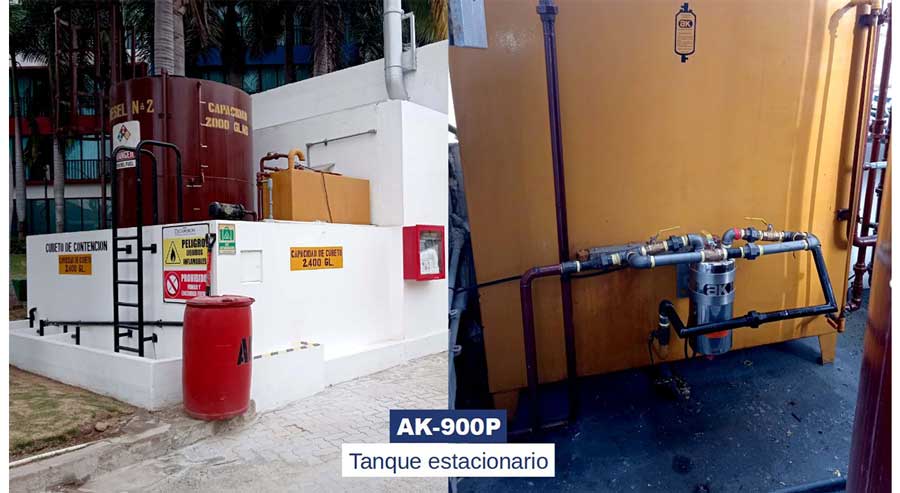
Modern diesel purification systems protect critical engine components from contamination
Why Purifying Industrial Diesel Is Essential
When we analyze the causes of diesel engine failures, we see that a very significant portion is due to fuel-related issues: free water, sediment, microorganisms, among others. Studies indicate that between 70% and 90% of engine failures could be related to fuel contamination.
Water, for example, is especially dangerous: not only does it reduce the lubricity of the fuel, but it also promotes corrosion, microbial growth (the well-known “diesel bug”) and the generation of sludge that clogs filters.
For these reasons, investing in a suitable purifier is not an expense but a preventive investment that protects pumps, injectors, combustion systems and avoids shutdowns that can cost much more than the equipment.
General Criteria for Choosing a Diesel Purifier
Before entering each sector, it is important to establish the common criteria that every industry should examine when choosing a purifier:
- Water and sediment separation capacity: ensure that the unit effectively removes free water, fine solid particles, and water-diesel emulsions.
- Construction materials according to environment: if working in corrosive, coastal or high humidity environments, construction in stainless steel or resistant materials should be considered.
- Flow compatibility with the engine or fleet: the purifier must support the required flow without generating pressure loss or bottlenecks.
- Maintenance required and expected lifespan: Equipment that requires less maintenance (or none) and offers a longer lifespan reduces total operating costs.
- Adaptation to the operating environment: dust, vibrations, humidity, accessibility, microbial contamination, storage stations, all of this makes a difference.
- Technical support, warranty and service: having manufacturer support, technical advice and warranty is key to operating with peace of mind.
These criteria will help us evaluate each sector and determine how to choose. We will then analyze them one by one, and finally see how our solution fits in.
Sector-by-Sector Analysis
Agricultural Sector: Purifiers for Field Machinery
In the agricultural sector, there are specific challenges: Machinery operates in open fields, with loose soil, dust, straw, mobile tanks, temperature fluctuations, and water contamination from condensation or rain. Fuel is often stored under less controlled conditions, increasing the risk of sediment and water in the tank.
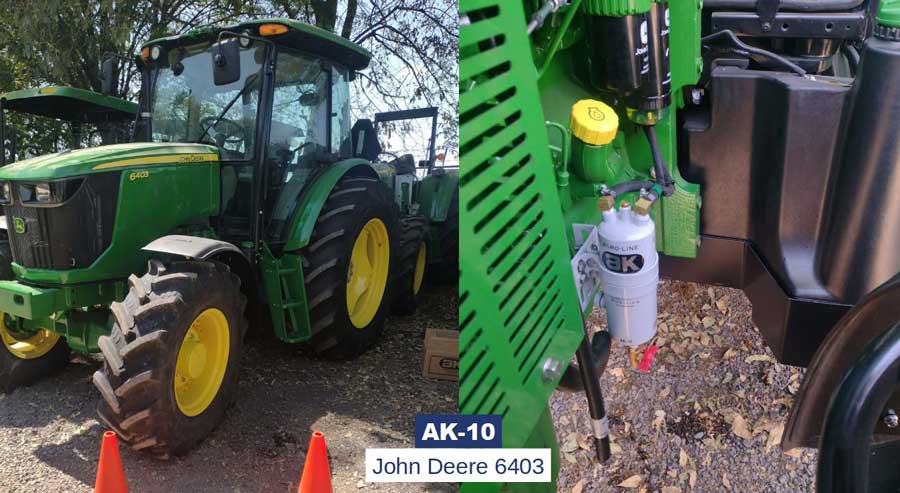
Agricultural machinery faces unique challenges from field conditions and fuel storage
In this environment, it is essential that the purifier has:
- High efficiency in removing water and sediment before it reaches the engine.
- Robust construction, resistant to vibrations and weathering.
- Low maintenance, given the demanding and sometimes remote operation.
For example, for agricultural machinery it is advisable to choose equipment that removes up to 99% of water/sediments, does not use disposable filters (or requires minimal replacement) and has a long service life. Learn more about protecting agricultural machinery in extreme climates.
Construction Sector: Purifiers for Heavy Equipment and Harsh Environments
Construction sites present particularly harsh conditions: airborne dust, mud, humidity, on-site refueling of tanks, moving equipment, and constant vibrations. Heavy machinery (excavators, backhoes, mobile generators) cannot afford downtime due to engine failure caused by contaminated fuel.
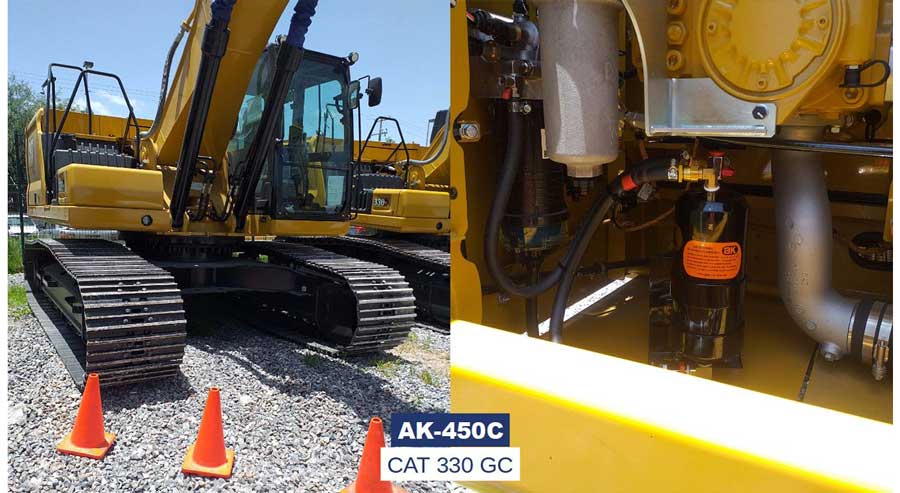
Construction equipment operates in some of the most challenging environments for fuel purity
The recommendations for this sector are:
- Constructed of stainless steel or materials that resist moisture, mud, and abrasive dust.
- High efficiency in separating free water and fine particles (concrete dust, soil) that tend to enter construction tanks.
- Low maintenance design since stopping a machine on site for filter maintenance is costly.
Transport Sector: Purifiers for Truck and Bus Fleets
In road transport, fuel is refueled at multiple stations, the fleet travels long distances, and time is a critical factor. A breakdown en route not only implies repairs but also lost deliveries, contract penalties, and reputational damage.
In this sector, it is advisable that the purifier has:
- High filtration efficiency to protect injection (both pumps and injectors).
- Sufficient flow capacity for large motor and for times of high demand.
- Minimal maintenance to avoid complicating fleet logistics.
Additionally, it considers that diesel represents a large part of the variable cost in transport, so protecting the fuel system improves profitability. Discover 5 indicators of contaminated fuel that transport fleets should monitor.
Power Generation: Plant Purifiers and Diesel Generators
In power generation—backup plants, generator sets—reliability is the priority. A generator that stops due to fuel failure can leave a hospital, data center, or essential industry without power.
The challenges here include: prolonged fuel storage (which favors water condensation and microbial growth), heavy usage conditions, and fuel variability.
Here’s what a good purifier should:
- Separate free water, sediments and prevent biological contamination (“diesel bug”).
- Designed for long-term storage, even with stagnant fuel.
- It has a warranty and a very long lifespan, since critical equipment is not easily replaced.
Mining: Purifiers for Extreme Conditions Underground and Open Pit
Mining is perhaps the most demanding environment: abrasive rock dust, constant vibrations, mud, humidity, remote site tanks, gigantic machinery, 24/7 operating hours.
Therefore, a purifier in mining must:
- Being constructed of high-strength stainless steel, it is virtually immune to dust, wear, and water.
- To have maximum efficiency (e.g., 99% retention of contaminants) because even minimal particles can block injectors of mineral haul trucks.
- To be highly reliable, with extended lifespan, minimal maintenance, so as not to stop a production line.
Maritime: Purifiers Against Salt Water and “Diesel Bug” on Vessels
The marine environment presents two major challenges: frequent free water (due to condensation and salinity) and a corrosive saline environment. Ship tanks often receive saline or condensed water and can generate microbial sludge that clogs engines at sea.
In this sector, it is advisable to:
- Anti-corrosion materials (marine stainless steel) and design to separate water very efficiently.
- Technology without saturable filters if the operation is continuous and extremely remote.
- Good construction to prevent the sea or humidity from degrading the system.
Industrial and Service Stations: Purifiers for General Use and Fuel Infrastructure
For more general applications (various industries, logistics warehouses, service stations), the challenges can be moderate or high depending on the fuel volume. The goal here is to maintain operational continuity and guarantee quality for the end customer.
It is recommended that the purifier:
- Efficiently remove water and sediment, even in storage tanks.
- It requires minimal maintenance, as it may be located in facilities that are not a priority area for mechanical maintenance.
- It has a long service life and support to meet fuel quality regulations.
At service stations, for example, delivering “clean” fuel is key to preventing breakdowns in customer vehicles, complaints, and reputational damage. Therefore, the purifier must be designed for high volume, continuous operation, and possibly exposure to the elements.
| Sector | Primary Challenges | Key Purifier Features | Recommended Material |
|---|---|---|---|
| Agricultural | Dust, water contamination, remote operations | High efficiency, robust construction, low maintenance | Carbon Steel (Agricultural Line) |
| Construction | Abrasive dust, mud, vibrations, humidity | Stainless steel, high particle separation, vibration resistance | Stainless Steel (Premium Line) |
| Transport | Multiple fuel sources, time sensitivity, fleet logistics | High flow capacity, minimal maintenance, injection protection | Carbon Steel or Stainless Steel |
| Power Generation | Long-term storage, reliability critical, microbial growth | Biological contamination prevention, long lifespan | Stainless Steel (Premium Line) |
| Mining | Extreme abrasion, 24/7 operation, remote locations | Maximum durability, 99% efficiency, minimal maintenance | High-strength Stainless Steel (Premium Line) |
| Maritime | Salt water, corrosion, continuous operation | Anti-corrosion materials, high water separation | Marine Stainless Steel (Premium Line) |
Integration of the AK Purifier Line by Gigonsa
At Gigonsa, our AK Purifier line is designed to precisely meet the challenges of all the sectors we’ve described. With over 30 years of international experience in diesel purification, we offer three specialized lines:
- Classic Line: made of carbon steel, ideal for general applications with a useful life of up to 15 years and a 7-year warranty.
- Premium Line: Made of high-strength stainless steel, designed for extreme conditions (fierce dust, humidity, salinity, vibration) and with a lifetime warranty.
- Agricultural Line: focused on field machinery, built in carbon steel, with a useful life of 15 years and a 7-year warranty.
All product lines offer 99% water and sediment removal without filters or replaceable components, requiring virtually no maintenance. This reduces costs and improves motor reliability. Implementing AK Purifier in any sector—agriculture, construction, transportation, power generation, mining, marine, or service stations—provides a comprehensive solution backed by Gigonsa, with a presence in over 25 countries and 365-day-a-year technical support.
How to Choose and Install Your Purifier
To conclude this guide, I recommend following these practical steps:
- Evaluate your operating environment: identify dust, water, storage conditions, vibrations, salinity.
- Define the required fuel flow rate: according to the number of engines, tank volume, and maximum flow.
- Select the purifier’s material and design: carbon steel or stainless steel, with appropriate lifespan and warranty.
- Ensure maintenance and support: verify that the manufacturer offers technical support, training, and monitoring.
- Install the purifier in the fuel line before the main engine filter or injection system for optimal protection.
- Perform follow-up: monitor fuel quality after purification, ensure that the expected results are met (less water, less sediment).
- Evaluate the benefits: less filter maintenance, less additional consumption, fewer stoppages, and extended lifespan of injectors and pumps.
If you need technical support at any point, at Gigonsa we are ready to advise you, size the right AK Purifier solution for your operation, and ensure that your fuel is protected.
Protect Your Investment with the Right Purifier
Choosing the right diesel purifier for your industry is no trivial matter: it involves understanding the operating environment, the specific challenges of the sector, fuel flow rates, and medium- and long-term operating costs. At Gigonsa, we believe that clean, dry diesel is the foundation for your machinery to perform at its best, minimizing breakdowns and maximizing productivity.
With our AK Purifier line, you can address each of the sectors we’ve analyzed—agriculture, construction, transportation, power generation, mining, marine, and industrial—with the peace of mind that comes from a robust, technically sound, and well-supported solution. It protects the engine, maximizes performance, and ensures your investment pays off for years to come.
At the end of the day, the difference lies in ensuring your fuel supply isn’t interrupted by preventable failures. The solution is to choose wisely, install the right purifier, and operate with peace of mind. At Gigonsa, we’re ready to guide you through that choice.
Or become a distributor to bring AK Purifier solutions to your region.
Follow Gigonsa on social media for more industry insights: LinkedIn • Instagram • YouTube
Explore more resources in our blog or view real-world success cases.