At Gigonsa, after more than three decades working with diesel engines in fleets, agricultural machinery, construction equipment, power plants, and industrial applications, we’ve seen a scene that repeats itself far too often: primary filters clogging repeatedly in a very short period. At first glance, it seems like a minor, almost “normal” problem, and the typical response is usually to change the cartridge, bleed a little diesel, and restart the engine. However, when this situation becomes recurrent, it’s no longer a simple matter of routine maintenance, but a clear sign that the fuel is reaching the system contaminated.
A primary filter that clogs repeatedly is not the problem itself—it’s a warning sign that your diesel fuel is contaminated with water and sediments beyond what conventional filtration can handle. The real issue lies in the fuel quality, not the filter.
Diesel fuel storage systems are vulnerable to contamination from water and sediments. Proper protection requires more than just filters.
From that experience, we understand that the primary filter isn’t the source of the problem, but rather the first casualty. Its function is to stop sediment, particles, and some of the free water before they reach the injection pump and injectors. Therefore, when it becomes consistently clogged, what’s really happening is that the fuel powering your engines carries a load of water and dirt far exceeding what a conventional filtration system can sustainably handle.
What Exactly Are Diesel Sediments and Particles?
To understand why your primary filter is clogging, we first need to understand what we mean by “sediment and particles” in the context of diesel. This isn’t just visible dirt or grime; it also includes oxides from the tanks, residues from fuel degradation, remnants of destabilized additives, and particles generated by microbial growth when water is present in the system. All of this travels in suspension and ends up accumulating on the filter surface.
The Composition of Diesel Contaminants
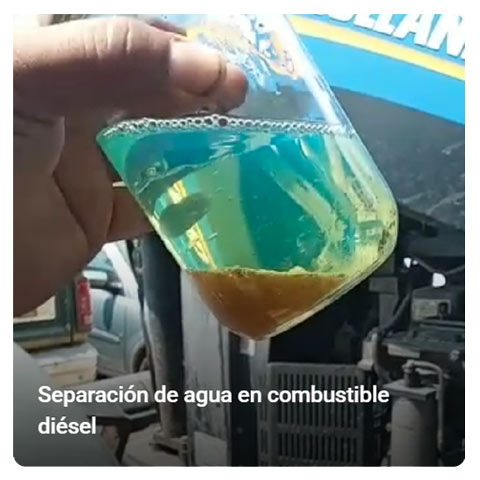
Over time, these contaminants form a kind of sludge or compacted layer on the filter media. The differential pressure increases, the flow decreases, and the engine begins to suffer from fuel starvation. The situation worsens when, in addition to solid sediments, the diesel fuel carries small droplets of emulsified water that have not been properly separated by a diesel fuel water separator. This water-fuel mixture not only causes corrosion but also accelerates the formation of new sediments.
How Water and Dirt Get Into Your Tank
Once we’ve identified the composition of these sediments, the next step is to determine how they enter the system. In our experience, the sources are numerous and interconnected: condensation within tanks due to temperature variations, unprotected vents that don’t allow dust or moisture in, diesel stored for extended periods without proper monitoring, fuel from suppliers with inadequate quality management, and, in many cases, insufficient or inconsistent maintenance practices.
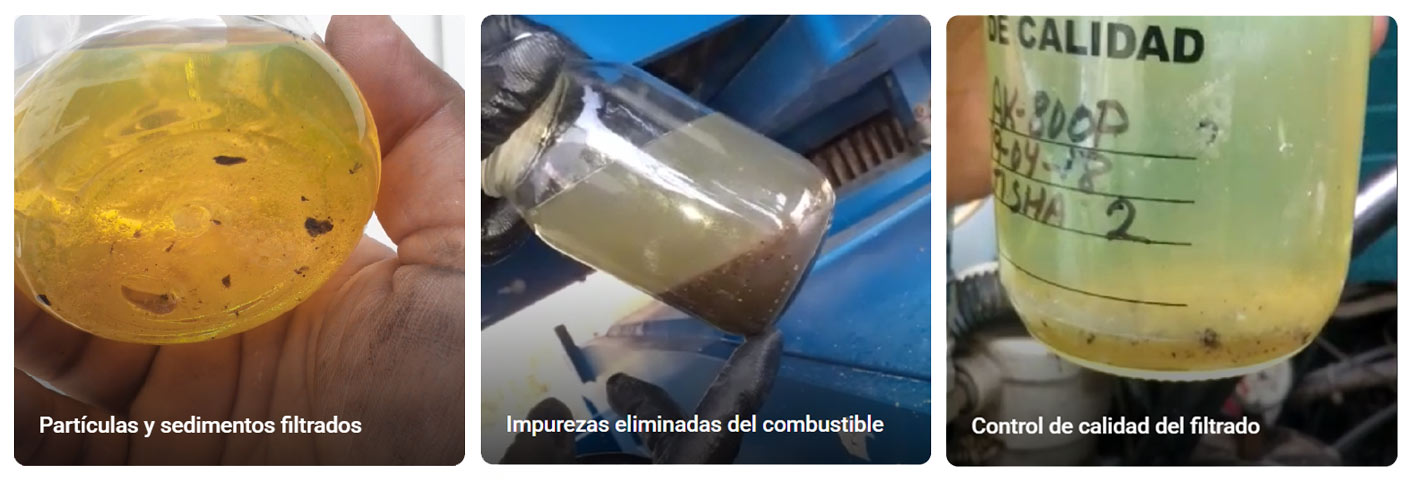
A heavily contaminated diesel filter showing sediment buildup. This indicates systemic fuel quality issues.
Every time a tank is filled, not only does fuel enter; air, carrying its own load of moisture and microscopic particles, is also introduced. Add to that the fact that diesel is hygroscopic, meaning it has an affinity for water, and the result is a perfect environment for free water to form and colonies of microorganisms to grow at the fuel-water interface. Without an efficient separation system—a true diesel water separator or water separator for diesel fuel—all of this will eventually end up directly impacting the primary filter.
Direct Impact on the Primary Filter and the Injection System
Once water, sediment, and particles enter the fuel system, the primary filter becomes the critical point. It’s the first line of defense and, therefore, the first to become clogged. Diesel flow is restricted, the transfer pump works harder, and the fuel pressure to the injection pump drops below recommended levels. The operator perceives this as a loss of power, difficulty accelerating, or even unexpected engine stalls under load.
Secondary Damage to Injection Components
Furthermore, when the primary filter operates at its limit or enters bypass mode, the finest particles and water droplets pass to the subsequent components of the system. This is where much more costly problems begin: premature wear of the injection pump, scoring of precision elements, clogged injectors, and poor spray patterns. This results in incomplete combustion, increased fuel consumption, more visible smoke, and higher emissions of pollutants. It all started with a seemingly small primary filter, but the root of the problem lay in the fuel.
| Warning Sign | Immediate Impact | Long-Term Consequence |
|---|---|---|
| Frequent primary filter clogging | Reduced fuel flow, engine power loss | Premature injection system failure |
| Water in fuel system | Corrosion, microbial growth | Costly component replacement |
| Dark, sludgy filter elements | Increased maintenance frequency | Unplanned downtime and lost productivity |
| Difficulty starting engine | Extended cranking time | Battery and starter motor wear |
| Visible smoke from exhaust | Poor combustion efficiency | Increased fuel consumption and emissions |
Why Changing Filters Is Not a Strategy, But a Palliative Measure
Faced with this reality, many companies choose to “live with the problem” and accept that changing primary filters more frequently is part of their operation. At first glance, it may seem like a manageable cost, but in reality, it’s an expensive and dangerous strategy. Each additional filter represents downtime, labor, the risk of air or dirt entering the system during the change, and, above all, a symptom that the root of the problem remains untouched within your tanks and lines.
From our perspective, changing filters without treating the fuel is like drying the floor without turning off the water. If the presence of water, sediment, and particles isn’t addressed before they reach the primary filter, the constant clogging will persist. Even installing a good diesel water separator in the line, if the system isn’t properly sized, if water drainage isn’t managed, and if it isn’t combined with appropriate storage practices, the solution will remain partial. The real strategy involves purifying the diesel at the source and maintaining it in optimal condition throughout its lifespan.
Gigonsa’s Solutions for Separating Water and Sediment from Diesel
At Gigonsa, we developed AK Purifier as a direct solution to these types of problems. Our technology is specifically designed to act as an advanced diesel fuel separation and purification system, removing up to 99% of water and sediment before it reaches the primary filters and injection system. Unlike a conventional filter or a simple diesel water separator, AK Purifier works through a centrifugal process without disposable elements, allowing for continuous protection without the burden of frequent replacements.

A well-maintained diesel engine with proper fuel purification can operate efficiently for decades.
Three Lines for Different Needs
Our three product lines—Classic, Premium, and Agricultural—are designed for diverse operating environments. The Classic line, manufactured from carbon steel, offers a service life of up to 15 years with a 7-year warranty for general diesel applications. The Premium line, made of high-strength stainless steel, is designed for extreme environments with high humidity, dust, salinity, or mud, and comes with a lifetime warranty. The Agricultural line, meanwhile, focuses on field machinery where dust, constant movement, and changing conditions demand additional protection against water and sediment present in the fuel.
By integrating AK Purifier by Gigonsa into your fuel systems, you not only significantly extend the life of your primary filters, but you also reduce unscheduled downtime, protect the injection pump and injectors, decrease visible smoke emissions, and optimize overall engine performance. All this with free maintenance, no need for spare parts, and expert technical support available to guide you through implementation and results monitoring. Instead of constantly changing filters, you can proactively manage your fuel with a diesel fuel water separator and purification solution designed to work with you for years.
Towards a Culture of Clean Fuel and Protected Engines
After understanding where the sediment comes from, how water enters the system, how the primary filter becomes clogged, and what the real impact is on the engine, it becomes clear that the solution is not only technical but also cultural. At Gigonsa, we believe that every company that operates diesel engines—whether in transportation, agriculture, construction, mining, power generation, or industry—needs to adopt a clean fuel culture: reviewing their storage practices, monitoring the quality of the diesel they receive, training their teams, and relying on technologies that truly separate water and retain contaminants before they reach the engine.
Ultimately, a constantly clogging primary filter is an opportunity for improvement. It’s the visible symptom of a problem that can be solved with a smart combination of best practices, monitoring, and properly designed purification solutions. In our experience, when fuel is treated with care and the integrity of the injection system is protected, the result is simple and powerful: more reliable engines, fewer unexpected shutdowns, lower operating costs, and a longer lifespan for your entire diesel system. And it all starts with listening to the signal from that primary filter that’s clogging too quickly.
Ready to solve your primary filter clogging problems permanently?
Contact Our Diesel Purification ExpertsOr explore our complete range of AK Purifier solutions for your specific application.
Related Articles
Learn more about diesel fuel purification and engine protection from our expert insights: