
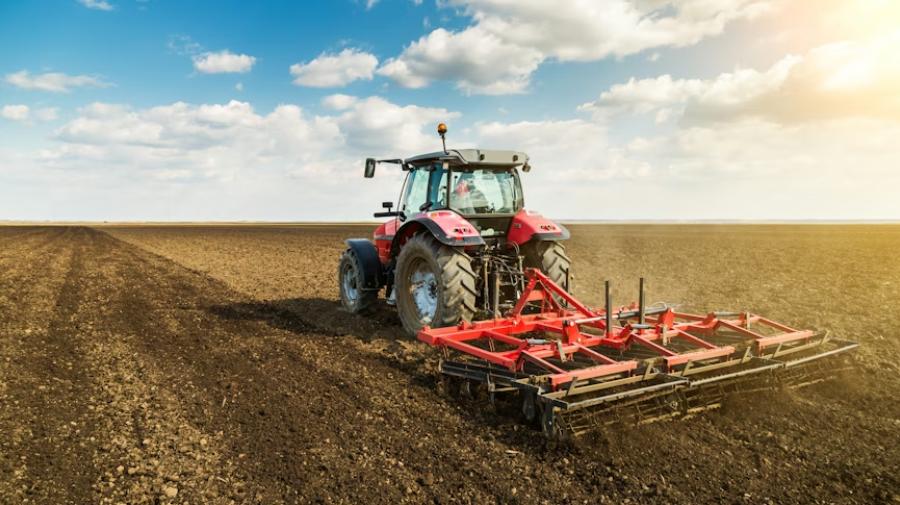
Agricultural activity can vary from areas with intense rainy seasons followed by prolonged droughts, coastal regions punished by salty breezes, and semi-arid areas where dust is part of the daily landscape; these form the context in which tractors, harvesters, seeders, and irrigation equipment must operate.
In these environments, the diesel engine is the heart of operations, but also the most vulnerable component when the fuel is no longer clean. Various studies indicate that up to 70% of failures in high-pressure diesel fuel system equipment are related to contamination, with water, sediment, and particulate matter playing a decisive role. In other words, it’s not just the weather that damages the machinery, but also how the fuel interacts with that weather.
Therefore, when we talk about protecting agricultural machinery in extreme climates against humidity, dust, and salinity, we shouldn’t limit ourselves to visible mechanical maintenance. We must focus on the silent but critical path of diesel fuel: from the storage tank, through filters and separators, to the injection pump and injectors. That’s where the battle for reliability is won or lost.
Fuel Contamination Impact
Studies show that up to 70% of failures in high-pressure diesel fuel systems are related to contamination. Water, sediment, and particulate matter are the primary culprits, leading to costly repairs and downtime for agricultural operations.

The invisible enemy: water and microorganisms in diesel
Humidity acts as a silent enemy within the fuel system. Although European regulation EN 590 only allows up to about 200 mg of water per kilogram of diesel, operational reality shows that water enters the system through multiple routes: condensation in tanks, temperature variations, poor storage practices, and even mixing with biofuels.
The situation becomes more complicated when FAME-type biofuels (biodiesel) come into play. These are hygroscopic, meaning they absorb more moisture than conventional diesel; it has been documented that they can retain 15 to 25 times more water, which increases the risk of microbial contamination and corrosion. This mixture of water, diesel, and microorganisms generates sludge, foul odors, clogged filters, and an ideal environment for internal corrosion of tanks and components.
In daily practice, the result is very concrete: injectors that stop spraying correctly, high-pressure pumps that lose tolerance, difficult starts, power loss, increased fuel consumption, and visible smoke emissions. The presence of water in the fuel is directly linked to corrosion of injectors, pipes, and pumps, a decrease in the cetane number, and premature system failures.
That’s why it’s so important to talk not only about filters, but about specific solutions such as the diesel fuel water separator, the diesel water separator, or the diesel water fuel separator, which are installed right in the fuel line to retain and separate water before the fuel reaches the most sensitive components.
Dust, sand and salinity: abrasion and corrosion from the environment
While moisture attacks the fuel from within, dust and salinity attack it from the outside and in combination with it. In arid and semi-arid regions, machinery operates surrounded by dust and fine sand which, if it reaches the fuel system through poorly sealed caps, vents, or careless refueling, becomes a highly efficient abrasive capable of rapidly wearing down precision components.
Technical literature confirms that solid particles in diesel fuel accelerate wear on the injection system and can cause severe damage to injectors, even in relatively new engines. It’s worth remembering that the tolerances in a common rail injector can be measured in microns; any particle that manages to pass through the filter acts like internal sandpaper.
In coastal regions, the salinity of the environment further amplifies the corrosive effect. Air laden with salts and humidity accelerates the oxidation of tanks, pipes, and metal fittings. When tiny droplets of brackish water mix with diesel fuel, the corrosion process becomes even more aggressive, compromising not only the system’s durability but also operational safety by increasing the risk of leaks.
This combination of dust, sand, and suspended salts makes a comprehensive approach to protection indispensable, in which the correct choice of diesel water separator filter and the overall filtration system becomes as strategic as the choice of the machine itself.
Water separators and filters: first line of defense in the field
In extreme climates, the practical question is clear: how to prevent all that water and contamination from reaching the injection pump and injectors? The answer begins with the proper installation and maintenance of diesel fuel filter and water separator systems, also known as diesel water separator fuel filters or simply diesel and water separators.
A water separator for diesel fuel is designed to force the fuel to change direction, speed, or flow pressure within a chamber. This change causes the denser water to separate and collect at the bottom of the device, while the cleaner fuel continues its path to the engine. This technology has become a key element in improving the performance of tractors and agricultural machinery by ensuring that the engine receives diesel free of water and contaminants.
| Contaminant Type | Primary Impact | Protection Solution |
|---|---|---|
| Water & Humidity | Corrosion, microbial growth, reduced lubrication | Diesel fuel water separator |
| Dust & Sand Particles | Abrasive wear on injection components | High-efficiency particulate filters |
| Salinity & Salt Particles | Accelerated corrosion, component degradation | Corrosion-resistant materials and coatings |
| Microorganisms | Sludge formation, filter clogging, fuel degradation | Biocide treatments and regular system cleaning |
However, not all systems are the same. Some use disposable filters that combine particle filtration and water separation, requiring frequent replacements and generating ongoing operating costs. Others use centrifugal or coalescing technologies that separate water from diesel without consumables, significantly reducing maintenance costs.
The English terminology found in manuals and catalogs—diesel fuel water separator, water separator for diesel, diesel fuel water remover, or diesel water remover—describes not only products but also the system’s protection philosophy. In all cases, the objective is the same: to ensure that the fuel reaches the engine with the least possible amount of water and sediment, minimizing the risk of corrosion, wear, and microbial growth.
Good fuel handling practices in harsh environments
In addition to having a good diesel fuel water separator, experience shows that disciplined fuel handling is a decisive factor for the lifespan of machinery. Most contaminants do not originate at the refinery but are introduced during storage, transport, and on-site handling.
Therefore, in extreme climates, it is essential to consider aspects such as the type of tank, its location, and its maintenance. Tanks exposed to direct sunlight during the day and sudden temperature drops at night are particularly prone to condensation on their internal walls. Furthermore, if the tank’s ventilation system is not properly protected, air laden with dust or salt will constantly enter the system.
Another good practice is to establish inspection and drainage routines. Having drain points in the tanks and water separators allows for the periodic removal of water that has accumulated at the bottom. In addition, visual monitoring of the fuel’s condition can be performed using samples in transparent jars; the presence of layers, turbidity, sludge, or foam indicates critical situations.

Training field personnel is also a key part of the strategy. Installing the best diesel water separator is of little use if, when filling a tank, caps are left open for hours, dirty containers are used, or it’s filled directly from jerrycans exposed to the elements. The “fill up quickly and get to work” mentality must be transformed into a “fill up clean so we can work longer” mentality.
How we protect agricultural machinery at Gigonsa with AK Purifier
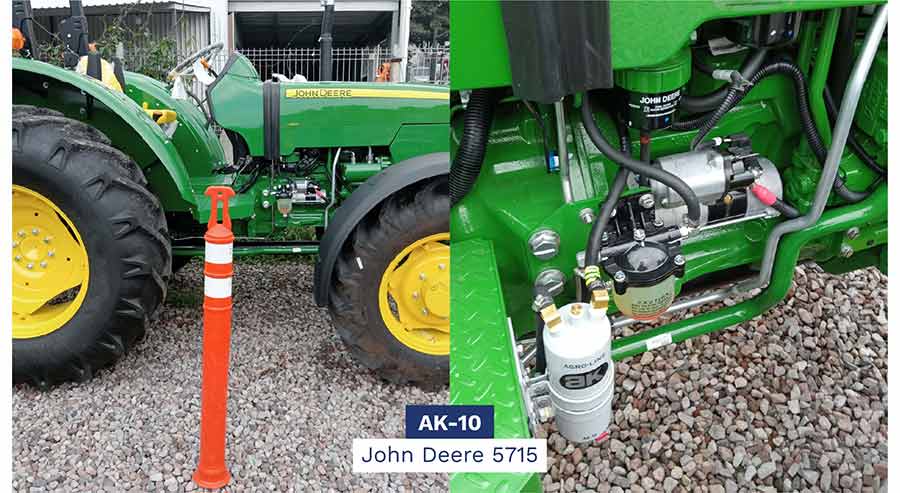
At Gigonsa, we developed the AK Purifier line precisely to meet these challenges in extreme climates, paying special attention to the needs of the agricultural sector. Our diesel fuel purifiers are designed to remove up to 99% of the water and sediment present in diesel fuel, protecting the injection pump and injectors, and extending the life of the primary filters.
We achieve this through advanced centrifugation technology, without filters or replaceable parts, which acts as a high-efficiency diesel fuel water separator. Unlike many conventional systems, AK Purifier units operate as a sealed unit, requiring no consumables, resulting in cost-free maintenance and a lifespan of up to 15 years, with 7-year warranties on our Classic and Agricultural lines, and a lifetime warranty on our Premium line.
For agricultural machinery operating in harsh conditions of humidity, dust, and salinity, our Premium Line, manufactured from high-strength stainless steel, provides comprehensive protection against corrosion and the accelerated wear caused by these environments. When the challenge lies in daily fieldwork—plowing, planting, harvesting, irrigation, pumping—the Agricultural Line offers an optimal balance of robustness, efficiency, and durability, specifically designed for agro-industrial equipment.
As a company with over 30 years of experience in diesel engine solutions and a presence in more than 25 countries, we complement our AK Purifier equipment with specialized technical support, fuel purification training, diagnostic visits, and ongoing advice on corrosion prevention and injector protection. Our purpose is clear: to protect our customers’ assets and contribute to environmental protection by reducing emissions and fuel waste.
Economic and environmental impact of working with clean diesel
Protecting agricultural machinery in extreme climates is not only a technical matter, but also an economic and environmental one. When fuel is kept clean and free of water thanks to a properly sized diesel fuel water separator and an efficient purification system, downtime is significantly reduced. Every hour the machine operates without interruptions due to injection failures, filtering issues, or poor combustion is an hour of real productivity.
Repair costs also tend to decrease. Internal corrosion of injectors and pumps, premature filter changes, and repeated maintenance on the fuel system often represent a significant cumulative expense over the life of a piece of equipment. By reducing the presence of water with solutions such as diesel fuel water remover or high-efficiency diesel water remover, these components maintain their tolerances and performance for longer.
From an environmental perspective, the use of clean diesel directly reduces pollutant emissions. An engine that receives fuel free of water and sediment burns more efficiently, generates less visible smoke, and emits fewer fine particles into the environment. This is especially relevant in rural areas where agricultural fleets may operate for many hours a day, close to communities and sensitive ecosystems.
Furthermore, by preventing water and microorganisms from degrading the fuel during storage, the need to dispose of entire batches of contaminated diesel is reduced, resulting in less waste, less risk of spills, and less impact on soil and water bodies. Thus, the decision to invest in improved diesel-water separation systems and proper handling practices also becomes an investment in more sustainable agriculture.
Turning extreme weather into an ally of productivity
At Gigonsa, we are convinced that working in extreme climates doesn’t have to mean high mechanical failure rates or uncontrolled maintenance costs. When you understand the critical role that water, dust, and salinity play in the life of diesel fuel, the protection strategy shifts from reactive to preventative.
Adopting advanced technologies to separate water from diesel, strengthening inspection and drainage routines, training staff in good storage and supply practices, and complementing all of this with robust purification solutions like AK Purifier, allows you to transform a hostile environment into a controlled environment.
Ultimately, protecting agricultural machinery from moisture, dust, and salt is protecting the productive heart of the countryside. It’s giving the diesel engine the fuel it deserves, even under the most challenging conditions, so that every workday translates into greater productivity, fewer downtimes, and greater peace of mind for those who depend on these machines to plant, harvest, and produce food.
Follow Gigonsa for more insights: LinkedIn | Instagram | YouTube
Explore our products, learn about our product lines, or become a distributor.