
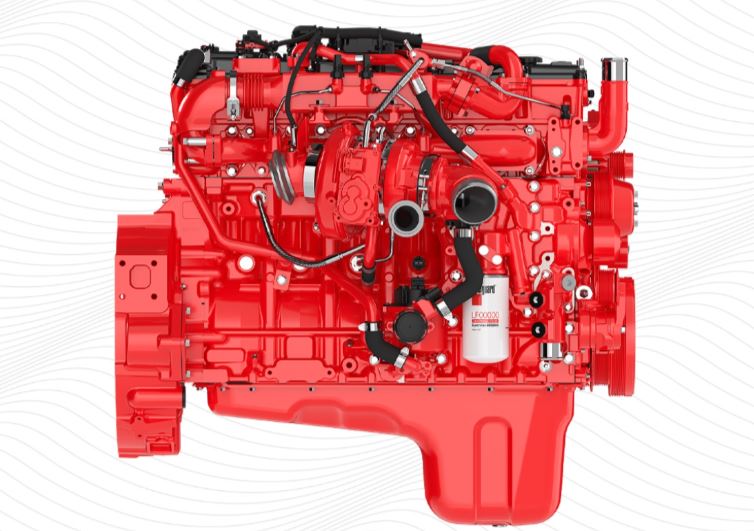
For over a century, the stylized “C” badge on a truck fender has communicated a clear message to the automotive world: reliability, torque, and an unwavering capacity for hard work. The Cummins diesel motor is more than just a power plant; it is the industrial heartbeat of agriculture, logistics, and heavy construction.
Unlike its V-8 competitors, the Cummins architecture has largely remained faithful to the Inline-6 design. This configuration offers perfect primary balance, fewer moving parts, and massive main bearing surface area—engineering choices that translate directly into the legendary durability enthusiasts swear by.

Crucial Ownership Insight
Owning a modern Cummins, particularly the high-output 6.7L variants, requires more than just turning the key. It requires an understanding of how raw mechanical strength interacts with sophisticated, yet delicate, fuel systems. In this guide, we dissect the evolution of this icon and reveal why fuel hygiene is the single most important factor in protecting your investment.
The Evolution of an Icon (1989 – 2024)
To understand where the technology is going, we must first appreciate the engineering lineage that brought us here. The history of the Cummins engine in consumer trucks is a tale of transition: from rugged mechanical simplicity to high-pressure digital precision.
From Mechanical Simplicity to High-Pressure Precision
The early years of the Dodge-Cummins partnership set a standard for longevity that modern engines still chase. Between 1989 and 1998, the 5.9L 12-Valve cemented its reputation as the “million-mile motor.”
The 5.9L 12-Valve and 24-Valve Era (1989-2007)
The crown jewel of the 12-valve era (specifically 1994-1998) was the P7100 mechanical injection pump. This component is revered not just for its ability to flow massive amounts of fuel for performance tuning, but for its mechanical resilience. These engines were lubricated by high-volume oil flow and featured simpler internals that could withstand abuse that would shatter modern equivalents.
However, even legends have weaknesses. The “Killer Dowel Pin” (KDP)—a small steel pin inside the timing gear case—can vibrate loose and fall into the gears, causing catastrophic failure. While this era represented peak mechanical durability, tightening emissions regulations forced a shift. The introduction of the 24-Valve engine brought better airflow and the VP44 electronic injection pump, marking the first step toward the digitized control we see today.
The 6.7L Turbo Diesel Revolution (2007.5-Present)
In mid-2007, Cummins changed the game by increasing displacement to 6.7 liters. This was not just a size upgrade; it was the dawn of the High-Pressure Common Rail (HPCR) era.
To meet EPA requirements and consumer demands for quieter, smoother power, the 6.7L engine abandoned mechanical timing for computer-controlled injection events. This allowed for multiple injection pulses per combustion stroke, drastically reducing noise and soot. Today, the 6.7L is available in Standard Output and High Output (HO) configurations, delivering torque figures that were once the domain of semi-trucks.
Technical Specifications & Performance Data
Modern performance is a game of numbers, but also of materials science. The current generation of Cummins diesel motors pushes the boundaries of what is physically possible within a cast-iron block. Below is a breakdown of the current B6.7 platform specifications found in 2021-2025 applications.
| Feature | Standard Output (SO) | High Output (HO) |
|---|---|---|
| Best Application | Heavy Towing / Hauling | Max Towing Capacity |
| Horsepower | 370 hp @ 2,800 rpm | 420 hp @ 2,800 rpm |
| Torque | 850 lb-ft @ 1,700 rpm | 1,075 lb-ft @ 1,800 rpm |
| Fuel System | Bosch HPCR (29,000 psi) | Bosch HPCR (30,500+ psi) |
| Block Material | Compacted Graphite Iron (CGI) | Compacted Graphite Iron (CGI) |
Understanding the HPCR System
The leap from the 5.9L to the 6.7L brought a massive increase in fuel pressure. While the old mechanical P-pumps operated at relatively low pressures, the modern HPCR system operates at up to 30,500 psi (2,100 bar).
At these pressures, fuel is not just a liquid; it acts as a hydraulic cutting fluid. The tolerances inside the injectors are measured in microns—often between 2 to 5 microns. To put this in perspective, a human hair is roughly 70 microns in diameter. This extreme precision is what gives the engine its efficiency, but it also creates its greatest vulnerability: intolerance to contamination.

The Reliability Factor: Common Issues and Solutions
While the “hard parts” (block, pistons, rods) of a Cummins diesel motor are robust, the peripheral systems often dictate the engine’s actual lifespan. The difference between an engine that lasts 200,000 miles and one that hits the 500,000-mile mark usually comes down to the owner’s understanding of the fuel system.
Why Modern Cummins Injectors Fail
The number one enemy of the 6.7L Cummins is fuel contamination. In older engines, a bit of bad fuel might cause some smoke. In an HPCR engine, microscopic particles of sediment or water act like shrapnel. When forced through an injector tip at 30,000 psi, these particles erode the ball valves and needle seats.
- White smoke at idle: A sign of unburned fuel (often irritates the eyes).
- Rising oil level: Fuel leaking into the crankcase (oil dilution), which can destroy bearings.
- Knocking: Incorrect injection timing due to leaking nozzles.
The “Silent Killer”: Water in Fuel (WIF)
Water is the ultimate destroyer of diesel engines. Diesel fuel is hygroscopic, meaning it naturally absorbs moisture from humidity and condensation in storage tanks. Furthermore, the introduction of Biodiesel blends (B5 to B20) has exacerbated this issue, as biodiesel attracts water more aggressively than straight petro-diesel.
Standard factory fuel filters are rated to catch particles, but they often struggle to separate emulsified water efficiently, especially as the filter media becomes saturated. If water passes the filter and reaches the injection pump, it flashes into steam due to the heat and pressure, causing immediate surface pitting and corrosion.
Proactive Maintenance: The Expert’s Playbook
To combat these risks, reliance on the “check engine light” is not enough. You must adopt a proactive maintenance strategy based on your specific Duty Cycle.
Cummins categorizes usage into “Normal” and “Severe.” It is crucial to note that most working trucks—those that tow, idle frequently, or drive in city traffic—fall under Severe Duty.
Advanced Protection: Upgrading Your Fuel System
Meeting the manufacturer’s minimum requirements keeps the warranty valid, but it doesn’t guarantee a million miles. To truly protect the HPCR system, you must exceed ISO standards. Standard paper filters work on a barrier principle—they trap dirt until they clog. Once clogged, flow is restricted, putting stress on the lift pump.
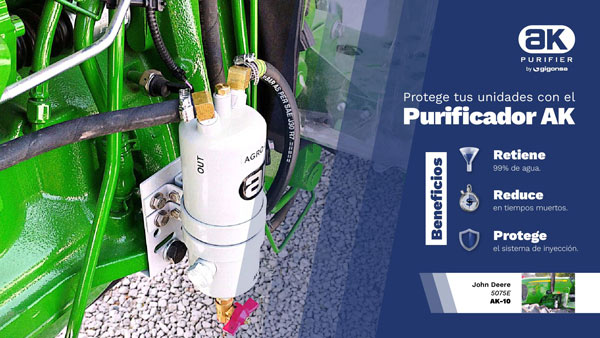
The Gigonsa Edge: This is where AK Purifier technology diverges from traditional filtration. Instead of relying solely on paper barriers, AK Purifier systems utilize centrifugal force.
- How it works: By spinning the fuel, the purifier separates contaminants based on density. Water and heavy sediments (down to 10 microns) are forced out of the fuel stream and into a collection chamber.
- The Result: It removes 99% of free water and sediment before the fuel ever reaches your factory filters.
Future-Proofing: Cummins and the 2027 EPA Regulations
The diesel landscape is shifting. As we approach the 2027 EPA emissions mandates, Cummins is executing its “Destination Zero” strategy, which fundamentally alters the engine architecture.
Cummins is preparing to launch the next evolution of the B-series, likely to be a 7.2L platform. This engine is designed to be “fuel agnostic,” meaning the core engine block can be fitted with different cylinder heads and fuel systems to run on diesel, natural gas, or even hydrogen. Additionally, new engines will feature advanced cylinder deactivation and 48-volt hybrid systems to manage heat and emissions—adding complexity that makes clean fuel more critical than ever before.

Frequently Asked Questions
How many miles will a Cummins diesel last?
With strict adherence to “Severe Duty” maintenance and high-quality fuel, a Cummins engine can easily surpass 300,000 to 500,000 miles. There are many documented cases of engines exceeding 1,000,000 miles when the fuel system is protected.
What is the best oil for a 6.7 Cummins?
For modern 6.7L engines (post-2017), you should use a high-quality 15W-40 or 5W-40 synthetic blend that meets the API CK-4 / CES 20086 standard.
Can I run biodiesel in my Cummins engine?
Yes. Post-2002 Cummins engines are approved for use with B20 biodiesel blends. However, because biodiesel acts as a solvent and attracts moisture, using a supplemental water separator like the AK Purifier is highly recommended.
Protecting Your Investment
The sophistication of modern High-Pressure Common Rail systems means the margin for error regarding fuel quality is non-existent. A single tank of contaminated fuel can ruin a set of injectors costing upwards of $5,000. Don’t let water and sediment compromise your engine.
Discover how maintenance-free centrifugal technology can extend your Cummins motor life by up to 15 years.
Visit AK Purifier by Gigonsa
Understand why water is the ultimate destroyer of modern high-pressure diesel engines and how to stop it.
Why standard paper filters fail to capture emulsified water and how centrifugal force offers superior protection.

Discover the proactive strategies that can drastically extend the operational lifespan of your diesel machinery.