
At Gigonsa, we want to share with you the experience we’ve accumulated over more than 30 years in solutions for industrial diesel engines. We know that one of the most common—and costly—challenges for those who operate fleets, agricultural machinery, power plants, or marine equipment is how to maximize the lifespan of their diesel engines. The good news is that, with the right combination of preventative maintenance, fuel quality control, advanced filtration, and operational optimization, it’s perfectly feasible to aim for a lifespan of up to 15 years or more for your engines. Below, we explain how to achieve this.
Proper maintenance and advanced filtration can significantly extend diesel engine lifespan
Key Takeaway
Diesel engines are inherently durable, but achieving 15+ years of service requires a systematic approach combining preventive maintenance, fuel quality management, advanced filtration systems like our AK Purifier, and intelligent operational practices. The return on investment comes from reduced downtime, lower repair costs, and extended asset life.
Why can diesel engines have such a long lifespan?
Diesel engines traditionally offer greater robustness and durability than gasoline engines. According to industry data, a well-maintained diesel engine can travel between 500,000 and 1,000,000 kilometers, and in some cases, much more. In terms of machinery or power generation, they can be in service for tens of thousands of hours with consistent care.
The logic is simple: by operating at lower RPMs, with higher torque, and in many cases lower temperatures, components experience less wear if managed correctly. Furthermore, best maintenance practices prevent premature failures—such as corrosion, fuel contamination, and excessive wear. Therefore, starting from this point allows us to understand the potential “ceiling” and what needs to be done to reach it.
Preventive maintenance: the initial element of longevity
Preventive maintenance is the foundation of any strategy to extend the life of a diesel engine. If you neglect this aspect, no other measure will fully compensate. For example, heavy equipment manufacturers point out that proper fluid management, cooling system maintenance, and fuel quality are essential.
Key Maintenance Points
- Regular oil and oil filter changes: oil lubricates, cools, and transports particles; if it loses its properties, wear accelerates.
- Check air, fuel and water-fuel filters: a clogged air filter reduces performance and increases consumption; contaminated fuel can cause major failures.
- Cooling system maintenance: leaks or improper coolant mixtures can cause overheating, which is one of the worst enemies of the engine.
- Adherence to the manufacturer’s service program, along with preventive diagnostics: regular inspection allows problems to be detected when they are still small.
By systematically performing these tasks, you reduce accumulated wear, minimize downtime, and ensure the engine operates under optimal conditions. And when this is done consistently, the results translate into a significantly longer lifespan.

Regular preventive maintenance is crucial for diesel engine longevity
Fuel quality and advanced filtration: the often underestimated factor
Beyond traditional mechanical maintenance, there’s a factor that’s often overlooked but has a critical impact: fuel quality and the presence of contaminants such as water, sediment, or microorganisms. Various guides indicate that clean, dry fuel is essential for extending the life of a diesel engine, as dirty fuel leads to inefficient injection, corrosion, premature wear, and failures in precision components.
From our experience at Gigonsa, we know that integrating an advanced filtration system into the fuel chain can make the difference between a regular service life and an extended service life of up to 15 years or more. When the fuel reaches the engine free of contaminants, the injection system operates more efficiently, the risk of corrosion decreases, and components maintain their original tolerances for much longer.
Recommended Fuel Management Practices
- Eliminate free water and water emulsions in the fuel, as water is one of the biggest accelerators of corrosion and injector failure.
- Protect against sediment and solid particles that can act as abrasives within the injection system.
- Microbiological control in fuel tanks, especially in warm climates or in stationary applications where the fuel may sit for a long time.
- Fuel monitoring before injection and advanced filtration that does not rely solely on traditional filters.
| Maintenance Area | Key Actions | Impact on Lifespan |
|---|---|---|
| Preventive Maintenance | Regular oil/filter changes, cooling system checks, adherence to service schedule | Extends engine life by 40-60% |
| Fuel Quality & Filtration | Advanced filtration, water removal, microbial control, sediment elimination | Prevents 80% of injection system failures |
| Operational Practices | Avoiding long idling, proper load management, seasonal checks | Reduces wear by 25-35% |
| Monitoring & Diagnostics | Regular fuel analysis, performance tracking, preventive diagnostics | Enables early problem detection (90%+ success) |
Efficiency and good usage practices: not only maintenance but also intelligent operation
Besides maintenance and fuel quality, the way the engine is operated and the conditions of use also influence its longevity. An engine used in extreme conditions, with many poorly managed idle hours or improperly sized loads, will be stressed and age faster.
Intelligent Operation Recommendations
- Avoid long idling sessions or operation at very low load: this scenario can cause the wet stacking phenomenon, which involves incomplete combustion and accumulation of residue in the exhaust, which can significantly reduce the engine’s lifespan.
- Maintain proper load when the unit requires it, and avoid frequent stops without reaching optimal operating temperature. Or, if this is not possible, ensure that water purging systems and filters are present in the fuel system.
- Perform checks after each season, if the equipment has long stops; do not leave old fuel, stagnant water or sediment unremoved.
Maintaining a clear maintenance history allows you to assess when a major service is due or when signs of wear appear. As several forums have pointed out, how well the engine has been maintained is more important than the number of kilometers driven. Thus, an engine that is well operated under appropriate conditions is much more likely to achieve a long life than one that is poorly managed, even if both have similar mileage.
How we at Gigonsa contribute to extended lifespan
As a company specializing in diesel fuel purification, at Gigonsa we have developed a range of comprehensive solutions that enhance all the aforementioned factors, allowing you to truly aspire to an engine lifespan of up to 15 years (and in some cases, even longer). Our offering is based on three product lines (Classic, Premium, and Agricultural) that cover different operating environments.
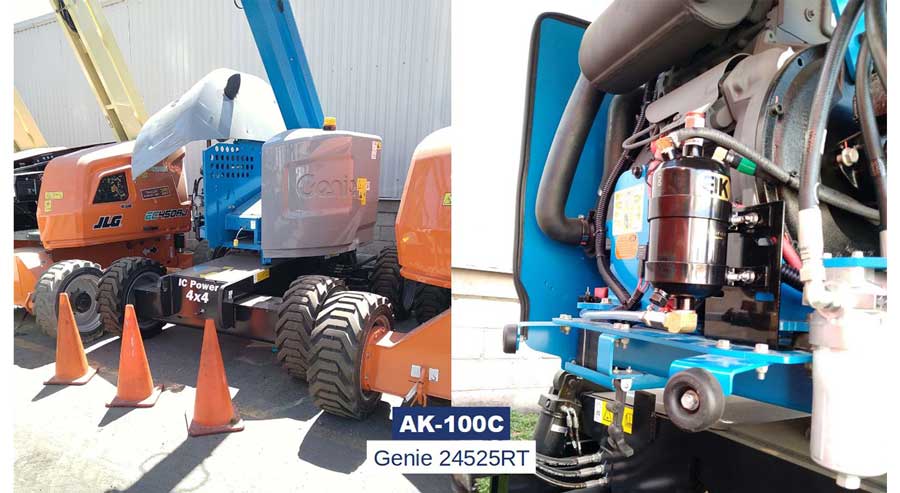
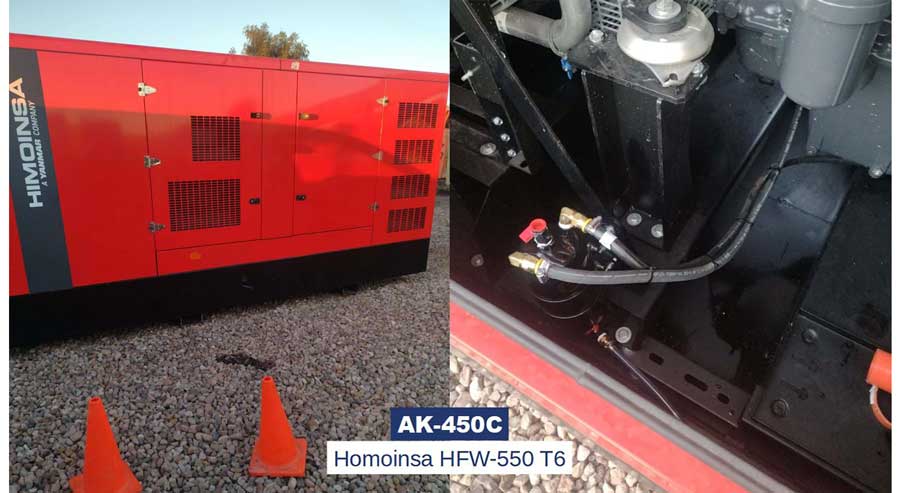
Advanced filtration systems like AK Purifier remove contaminants to protect diesel engines
Our Technology Capabilities
- 99% removal of water and sediment from fuel.
- Maintenance at no cost and without the need for replacement parts.
- Equipment lifespan of up to 15 years (or lifetime in the Premium line).
- Comprehensive protection against corrosion, wear and microbial contamination.
These benefits translate directly into fewer failures, less internal wear, and greater engine reliability. Furthermore, we complement this with 365-day-a-year technical support, training, and consulting. By combining your best maintenance practices, quality filtration, and smart operation with our technology, you are well-positioned to achieve even the most ambitious lifespan goals.
Key Takeaways for Extended Diesel Engine Life
At Gigonsa, after three decades dedicated to protecting and optimizing diesel engines with our AK Purifier brand, we’ve proven that achieving a lifespan of up to 15 years for your engines isn’t a distant dream, but an achievable goal. However, it requires commitment: rigorous preventative maintenance, strict fuel quality control, advanced filtration, and smart operation.
By implementing this integrated approach—and by leveraging technologies like ours—you can transform operating costs and boost the performance of your assets. We’re here to support you on this journey toward durability, reliability, and efficiency.
Connect with Gigonsa:
LinkedIn | Instagram | YouTube | Blog | Case Studies