In the automotive and industrial world, marketing brochures are obsessed with two numbers: horsepower and torque. We get it. There is a primal satisfaction in knowing your 6.7L PowerStroke can tow a mountain, or that your EcoBoost creates sports-car acceleration from a V6. But at Gigonsa, after protecting over 10,000 industrial assets across 25 countries, we know the metric that actually matters to your bottom line isn’t stamped on a dyno sheet.
The Gigonsa Reality Check
It’s longevity. When a Ford engine powers a mining rig in Chile, a combine harvester in the American Midwest, or a logistics fleet in Europe, “performance” ceases to mean speed. It means uptime. The true economics of owning a Ford engine go far beyond the sticker price; they live in the gap between operational efficiency and the catastrophic cost of failure.
This isn’t just about keeping an engine running; it’s about asset protection strategy. Let’s look past the glossy ads and dive into the engineering reality of modern Ford platforms.
The Evolution of Ford Power: From EcoBoost to PowerStroke Platforms
To understand the economics of maintenance, we must first understand the architecture. Ford’s shift over the last two decades has been nothing short of revolutionary, moving away from naturally aspirated displacement toward high-pressure forced induction. Whether we are discussing the EcoBoost (gasoline direct injection) or the PowerStroke (common rail diesel), the unifying theme is pressure.
The High-Pressure Paradigm Shift
Modern engines achieve massive power outputs with smaller displacements by atomizing fuel into microscopic mists.
- The PowerStroke Reality: The 6.7L diesel platform utilizes a Common Rail system operating at pressures exceeding 30,000 PSI. To put that in perspective, the tolerances inside the fuel system are measured in microns—tighter than a human hair.
- The EcoBoost Factor: Similarly, Ford’s gasoline platforms inject fuel directly into the combustion chamber (GDI) rather than the intake port.
While this engineering miracle delivers incredible efficiency and torque, it has a significant trade-off: fragility to contamination. In the old days, a diesel engine could almost run on dirty frying oil. Today, a single droplet of water or a microscopic particle of sediment acts like a bullet ricocheting through that high-pressure system. The rules have changed. High performance requires high purity.
Critical Vulnerabilities: The Hidden Costs of Fuel Contamination
If we view your engine as a financial asset, fuel contamination is market volatility—an external risk that can wipe out value overnight. The “Check Engine” light is rarely just a nuisance; often, it is the herald of a five-figure repair bill.
The CP4 Failure Crisis in 6.7L PowerStroke Engines
Let’s address the elephant in the room: the Bosch CP4 injection pump. This component is standard in many 6.7L PowerStroke engines (specifically pre-2020 models, though risks remain in newer iterations depending on fuel quality).
The CP4 pump is designed for European diesel, which has higher lubricity than the Ultra-Low Sulfur Diesel (ULSD) found in the Americas. When water enters this system—even in trace amounts—it displaces the diesel that lubricates the pump. The result? Metal-on-metal grinding.
The pump doesn’t just stop working; it disintegrates. It sends metal shavings (often called “glitter”) throughout the entire fuel system—injectors, rails, lines, and the tank.
The Economic Impact: This is not a repair; it is a total system replacement. The cost to fix a “glittered” fuel system typically ranges between $10,000 and $15,000. Competitors talk about changing filters every 10,000 miles. We talk about preventing the $15,000 bill that happens between those filter changes.
Carbon Buildup and Turbo Wear in EcoBoost Systems
On the gasoline side, the EcoBoost faces a different demon. Because fuel is injected directly into the cylinder, it no longer washes over the intake valves. Over time, oil vapors from the PCV system bake onto the valves, causing carbon buildup. Furthermore, the twin-turbo systems spin at incredibly high RPMs. Dirty oil or fuel dilution reduces lubrication efficiency, leading to premature turbo failure.
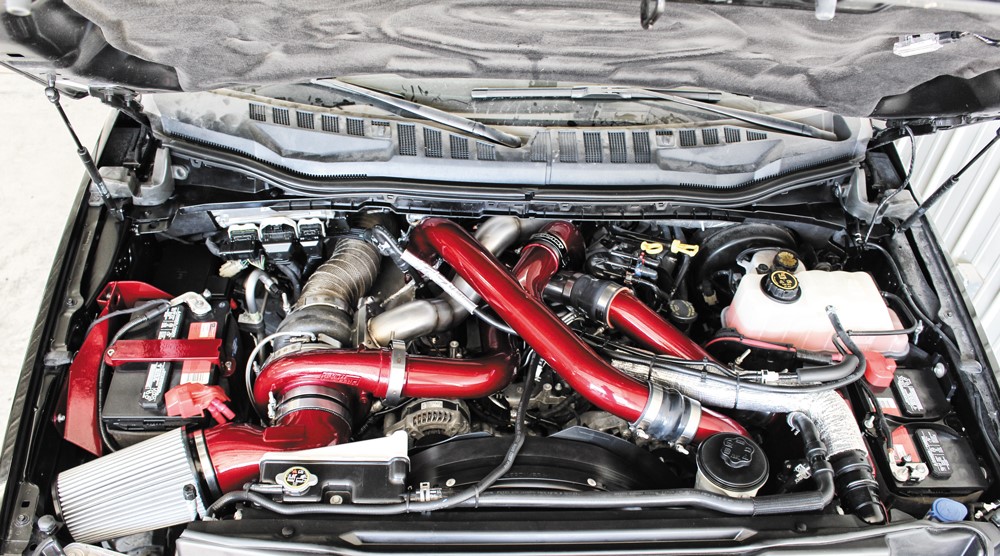
 Figure 1: Modern high-pressure fuel systems are engineering marvels, but highly susceptible to contamination.
Comparative Analysis: Traditional Filtration vs. Advanced Centrifugal Purification
Most fleet managers operate under a dangerous misconception: “I have a fuel filter; therefore, I am protected.” Standard cellulose (paper) filters are barrier methods. They work like a sieve. As they catch contaminants, they clog, restricting flow and reducing engine performance. More worryingly, they are often unable to separate emulsified water—the silent killer of injectors—once the paper becomes saturated.
At AK Purifier, we don’t just filter; we purify. By leveraging centrifugal force, we separate contaminants based on density rather than particle size.
| Feature | Traditional Cellulose Filters | AK Purifier (Centrifugal Tech) |
|---|---|---|
| Filtration Efficiency | Variable (drops as filter saturates) | Constant 99% removal of water & solids |
| Water Separation | Limited (often passes emulsified water) | Total separation of free & emulsified water |
| Maintenance Cost | Recurring (Parts + Labor every service) | Zero (No replaceable parts) |
| Lifespan | 10,000 – 15,000 miles | 15 Years (Carbon Steel) to Lifetime (Stainless) |
| Asset Protection | Reactive (catches dirt after it enters) | Proactive (cleans fuel before vital components) |
| Warranty | 1 Year (limited) | 7 Years to Lifetime |
By installing an AK Purifier, you aren’t just buying a part; you are eliminating a recurring operational expense (OPEX) and insuring the engine against catastrophic capital expense (CAPEX).
Strategic Maintenance for Industrial and Heavy-Duty Ford Fleets
For our clients in mining, agriculture, and heavy transport, a Ford F-Series or a Ford industrial engine isn’t a truck; it’s a tool that prints money. Downtime is the enemy. Through our analysis at Gigonsa, we have seen that engines protected by centrifugal purification can extend their operational lifespan by up to 30%.
Sector-Specific Use Cases
- Agriculture (The Dust Bowl Factor): In harvest season, dust is ubiquitous. Our Agricultural Line (Carbon Steel) ensures that even if you are refueling from a dusty field tank, the diesel entering your Ford engine is hospital-grade clean.
- Mining & Marine (The Corrosion Factor): For environments with high salinity or humidity, the Premium Line (Stainless Steel) prevents the internal corrosion of the fuel system. We have seen PowerStroke engines in salt mines reach 15 years of service life simply because the salt and water never touched the injectors.
 Figure 2: Agricultural environments expose engines to extreme dust and contaminants, requiring superior filtration.
Frequently Asked Questions about Ford Engine Reliability
Why do Ford 6.7L fuel pumps fail so often?
The primary cause is low lubricity in modern diesel fuel combined with water contamination. The CP4 pump relies on diesel for lubrication. If water displaces the diesel, the pump creates metal shavings that contaminate the entire fuel system.
Can I prevent the CP4 failure without replacing the pump?
Yes. The most effective prevention is ensuring 100% water removal and high fuel purity. While you cannot change the pump design easily, installing an AK Purifier removes the water and sediments that trigger the failure, drastically reducing the risk profile.
What is the most reliable Ford diesel engine?
Historically, the 7.3L PowerStroke (pre-2003) is legendary for durability. However, the modern 6.7L PowerStroke (3rd Gen, 2020+) is incredibly reliable if fed clean fuel. The engine block is solid; the fuel system is the variable.
Is the AK Purifier compatible with the Ford warranty?
Absolutely. The AK Purifier is a non-invasive, pre-filtration system. It does not alter the engine’s mechanics or ECU. It simply ensures that the fuel reaching the factory filters is cleaner than the manufacturer requires, effectively protecting the warranty.
The Verdict: Engineering Your Own Luck
Owning a Ford engine offers tremendous potential for power and productivity. But relying solely on factory filtration in a world of questionable fuel quality is a gamble with high stakes. The economics are simple: You can budget for a $15,000 repair, or you can invest once in permanent protection.
Are you ready to stop gambling with your fleet?
View Premium Line ProductsOr contact our engineering team for a custom ROI calculation.
Related Articles

Water: Diesel’s Worst Enemy
Understand why water is the silent killer of injectors and how it leads to catastrophic engine failures.
Read more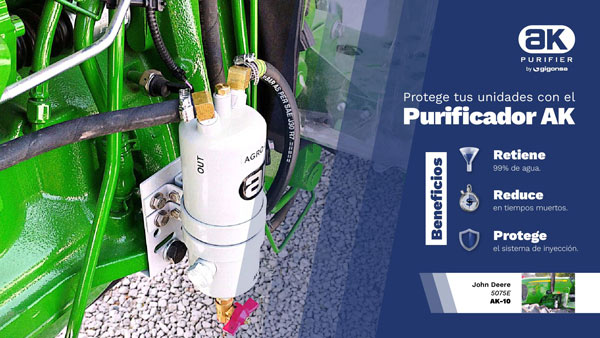
Centrifugal vs. Traditional Filters
A deep dive into why paper filters fail to separate emulsified water and why centrifugal tech is the future.
Read more
5 Indicators of Contaminated Fuel
Don’t wait for the engine light. Learn the early warning signs of bad fuel before it destroys your pump.
Read more