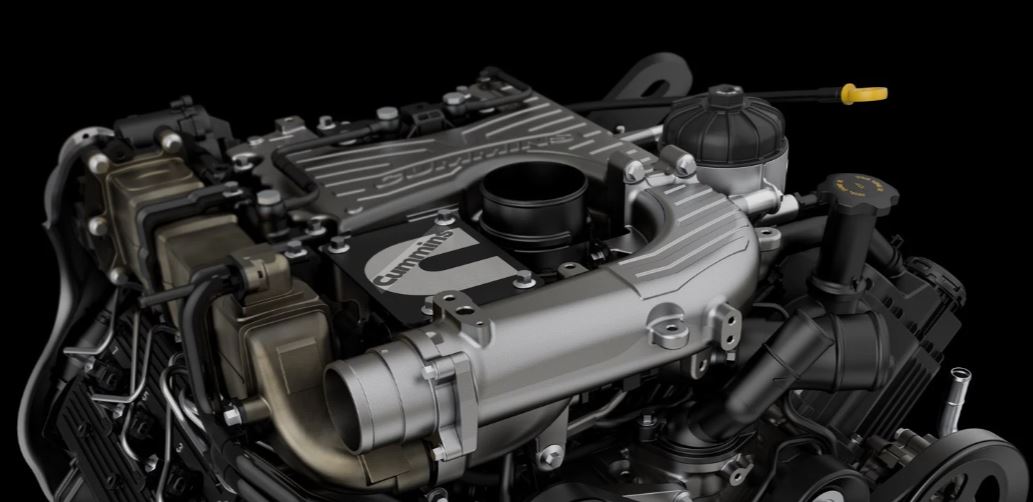
The automotive world held its breath when Nissan announced the Titan XD equipped with the Cummins 5.0L V8 Turbo Diesel. It was pitched as the “tweener” truck—bridging the gap between the half-ton daily driver and the three-quarter-ton workhorse. On paper, it was a match made in heaven: Japanese manufacturing precision paired with American diesel royalty.
However, as we move through 2026, the narrative surrounding the ISV5.0 engine has shifted from excitement to caution. With the engine now discontinued, owners are left asking a critical question: Do I possess a misunderstood engineering masterpiece, or is my truck a ticking time bomb?
The Reality is Nuanced
The Nissan Cummins platform boasts structural rigidity that rivals heavy industrial machinery, yet it is plagued by ancillary system failures that can bankrupt an owner. This guide is not just a review; it is an engineering survival manual. We will dissect the technical architecture, expose the critical failure points, and demonstrate how Gigonsa’s AK Purifier technology can transform this reliability risk into a legacy asset.
Technical Deep Dive: The Architecture of the 5.0L V8 ISV5.0
To understand the failures, we must first appreciate the ambition behind the design. The ISV5.0 was not simply a scaled-down semi-truck engine; it was a clean-sheet design aimed at revolutionizing the light-duty market.
 The core strength of the ISV5.0 lies in its industrial-grade Compacted Graphite Iron block.
Compacted Graphite Iron (CGI): Commercial Strength in a Pickup
At the heart of the engine lies a cylinder block manufactured from Compacted Graphite Iron (CGI). Unlike standard gray iron used in lesser diesels, CGI aligns the graphite particles within the metal to provide superior tensile strength and fatigue resistance while reducing weight.
This is the same material technology found in heavy-duty Class 8 commercial trucks and high-performance racing engines. From a purely structural standpoint, the engine block is virtually bulletproof. It handles high compression ratios and thermal stress with ease, suggesting that the “bones” of the Nissan Cummins are capable of lasting hundreds of thousands of miles—provided the external organs don’t fail first.
The M2 Two-Stage Holset Turbocharging System
Bolted to this robust block is the Holset M2 two-stage turbocharger. This system is an engineering marvel designed to solve the age-old diesel problem: turbo lag.
The system utilizes a small high-pressure turbo for immediate low-end throttle response and a larger low-pressure turbo for top-end power. Controlled by a patented Rotary Turbine Control (RTC) valve, the system manages exhaust gas flow seamlessly between the two turbines. When functioning correctly, it provides a linear power curve that feels almost electric. However, as we will explore, this complexity introduces tight tolerances that are unforgiving of poor lubrication or soot contamination.
The Core Vulnerabilities: Why Most Nissan Titans Fail
Despite the robust block, the Titan XD has earned a reputation for catastrophic failures. These issues rarely stem from the pistons or crankshaft but rather from the fuel and emissions systems supplied by third-party vendors.
The Bosch CP4.2 Pump: A Critical Lubricity Analysis
The single greatest threat to the Nissan Cummins ISV5.0 is the Bosch CP4.2 high-pressure fuel pump. This pump was originally designed for European diesel standards, which mandate high lubricity. North American Ultra-Low Sulfur Diesel (ULSD), however, is significantly “drier.”
When the fuel lacks sufficient lubrication—or worse, contains water—the internal cam and rollers of the CP4.2 begin to grind against each other. This friction generates microscopic metal shavings that are sent downstream into the fuel rails and injectors.
Once these shavings enter the system, the damage is irreversible. The entire fuel system, including lines, rails, and injectors, must be replaced. In 2026, this repair bill frequently exceeds $10,000, turning a reliable truck into a lawn ornament overnight.
EGR Clogging and Coolant Leaks: The Silent Killers
The Exhaust Gas Recirculation (EGR) system on the ISV5.0 is notoriously prone to fouling. The Holset M2 turbo setup requires precise exhaust management, but when the EGR valve clogs with soot, it disrupts this balance.
Furthermore, the EGR cooler has a documented history of internal thermal stress cracks. When this happens, coolant leaks into the exhaust stream or, in worst-case scenarios, into the cylinders. This not only leads to white smoke and coolant loss but can also cause “hydro-lock,” bending rods in an otherwise indestructible CGI block. The root cause is often incomplete combustion caused by poor fuel quality, leading to excessive soot production.
The $34,000 Fuel System Disaster: DEF Contamination
Perhaps the most feared scenario for any modern diesel owner is the accidental introduction of Diesel Exhaust Fluid (DEF) into the fuel tank. Due to the Titan’s filler neck design, this error is alarmingly common.
Chemically, DEF is a mixture of urea and deionized water. When introduced to the high-temperature, high-pressure environment of the fuel system, it undergoes a rapid chemical reaction:
These urea crystals act like sandblasting media inside the sensitive CP4 pump and injectors. Nissan’s technical bulletin NTB16-125a is clear: this damage is not covered by warranty. In severe cases, where the contamination is not caught immediately, owners have reported repair estimates as high as $34,000, effectively totaling the vehicle.
Beyond the Owner’s Manual: Advanced Maintenance Strategies
If you rely on the standard owner’s manual maintenance schedule, you are essentially gambling with your engine’s life. To ensure survival past the warranty period, a more aggressive approach is required.
Why 10,000-Mile Intervals Are Killing Your Engine
The factory-recommended 10,000-mile oil change interval is optimized for low cost of ownership marketing, not for engine longevity. In real-world driving—idling, towing, and stop-and-go traffic—fuel dilution breaks down oil viscosity much faster.
Furthermore, fuel filters on the Titan XD are often pushed to their limit. Standard paper filters are efficient at trapping solid particulates, but they struggle with emulsified water. As the filter becomes saturated, water molecules can be forced through the media under high pressure, heading straight for the vulnerable CP4 pump.
The Science of Fuel Purification: Centrifugal Force vs. Paper Filters
To truly protect the ISV5.0, we must move beyond simple filtration and look toward purification. Traditional filters work on a barrier principle—trapping dirt until they clog. However, water is a liquid contaminant that can bypass these barriers.
| Feature | Standard Paper Filter | Gigonsa AK Purifier (Centrifugal) |
|---|---|---|
| Method | Physical Barrier | Centrifugal Force (Physics) |
| Water Removal | Limited (Saturation Risk) | 99% Removal (Density Separation) |
| Maintenance | Replace Cartridges ($$$) | Zero-Maintenance / Self-Cleaning |
| CP4 Pump Protection | Basic | Maximum |
The solution lies in physics, specifically centrifugal force. By spinning the fuel before it reaches the factory filters, we can separate contaminants based on density. Water and heavy sediments, being denser than diesel, are forced to the perimeter of the unit and separated from the clean fuel stream. This is not just filtering; it is refining the fuel on-board the vehicle.
AK Purifier by Gigonsa: The Definitive Solution for the ISV5.0
At Gigonsa, we understand that the Nissan Cummins is a heavy-duty engine trapped in a light-duty application. To unlock its true potential and mitigate the risks of the CP4 pump, we developed the AK Purifier.

Removing 99% of Water and Sediments Before the Injection Rail
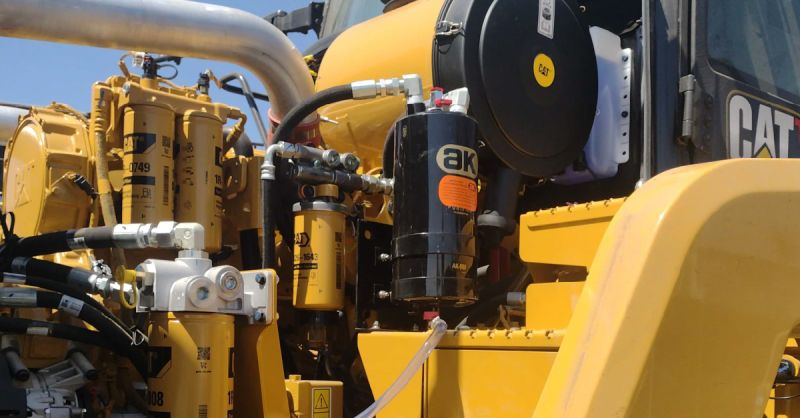
The AK Purifier acts as the first line of defense. Installed between the fuel tank and the primary factory filter, it utilizes advanced fluid dynamics to remove 99% of free water and sediments.
By ensuring that the fuel reaching the Bosch CP4.2 pump is devoid of water, the lubricity of the diesel is maximized. Water is the primary cause of rust and cavitation in fuel pumps; by removing it, the AK Purifier effectively insures the most vulnerable component of your truck. Furthermore, by delivering cleaner fuel, combustion efficiency improves, resulting in less soot production—directly alleviating the strain on the EGR system and Turbocharger.
Zero-Maintenance Protection for Construction, Mining, and Transport
For owners using their Titan XD in rigorous sectors like construction or agriculture, downtime is not an option. Unlike stock water separators that require constant draining and sensor monitoring, the AK Purifier is a zero-maintenance solution.
- No Replaceable Elements: There are no cartridges to buy, ever.
- Self-Cleaning Design: Contaminants are easily purged via a simple valve.
- Durability: Available in our Premium Line (Stainless Steel), the unit is backed by a Lifetime Warranty, resisting corrosion from road salts, mud, and harsh industrial environments.
This technology transforms the Titan XD from a “reliability risk” into the commercial-grade asset it was meant to be.
Future-Proofing Your Titan XD in 2026 and Beyond
The Nissan Cummins 5.0L is a paradox: an engine with a million-mile block and a hundred-thousand-mile fuel system. With the discontinuation of the model, parts scarcity will eventually become an issue, making preservation the only logical strategy.
You cannot change the design of the CP4 pump or the complexity of the Holset turbo. However, you can control the quality of the fuel that feeds them. By integrating the AK Purifier by Gigonsa, you are not just adding an accessory; you are engineering out the variables that lead to failure.
Don’t wait for the “Check Engine” light or the dreaded Limp Mode. Protect your investment today.
Speak with a Gigonsa Engineering ConsultantRelated Engineering Insights
5 Indicators of Contaminated Fuel
Recognize the early warning signs of bad diesel before it destroys your injection system.
Centrifugal Filtration vs. Traditional Filters
A technical breakdown of why physics beats paper media in extreme industrial environments.

Extend Diesel Engine Life up to 15 Years
Proven strategies to maximize the ROI of your heavy-duty fleet through advanced purification.