
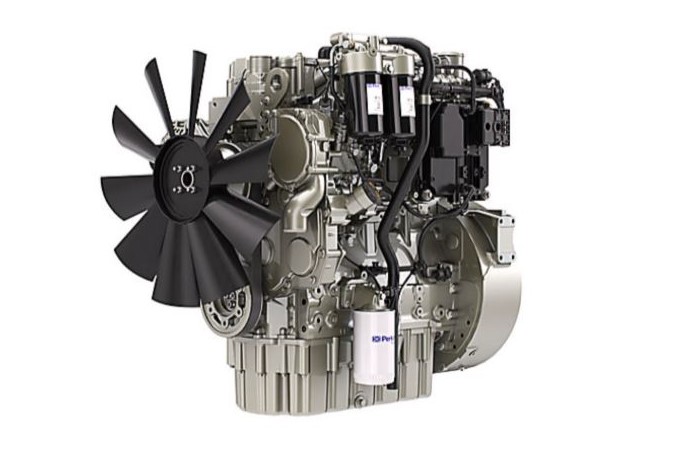
Comprehensive insights on maintaining Perkins 1100 & 1200 Series engines in the HPCR era.
For decades, the name Perkins has been synonymous with industrial resilience. From the agricultural fields utilizing the legendary 4.236 to the modern construction sites powered by the Tier 4 Final 1200 Series, these engines are the heartbeat of heavy industry. However, as emission regulations have tightened and engineering has advanced, the rules of engagement for engine maintenance have fundamentally changed.
Modern Perkins engines are feats of precision engineering, delivering unprecedented torque and efficiency. Yet, this sophistication comes with a hidden cost: hypersensitivity. The rugged forgiveness of mechanical injection has given way to the microscopic tolerances of High-Pressure Common Rail (HPCR) systems. This guide moves beyond basic maintenance tips to explore the physics of failure, explaining why modern engines fail and how to engineer immunity against the most common threats to your machinery.
 Modern industrial engines require precision maintenance protocols.
The Evolution of Perkins Engineering: From Mechanical Simplicity to HPCR Precision
To understand why modern engines require a different approach to fuel hygiene, one must first look at the trajectory of Perkins engineering. The shift wasn’t merely about adding electronics; it was a complete reimagining of the combustion process to meet Stage V and Tier 4 Final emission standards.
Understanding the Perkins Product Range: 400, 1100, and 1200 Series
Perkins’ current lineup is categorized by displacement and application, but the technical divide is defined by the injection method:
- The 400 Series: Compact powerhouses often found in mini-excavators and skid steers. While some naturally aspirated models remain simple, the turbocharged variants are increasingly adopting electronic governing.
- The 1100 Series: The industrial workhorse. Replacing the 1000 series, these engines (specifically the 1104D and 1106D) mark the critical transition point where mechanical rotary pumps were largely phased out in favor of electronic control to manage higher injection pressures.
- The 1200 Series: The pinnacle of emission compliance. These engines utilize Diesel Oxidation Catalysts (DOC), Selective Catalytic Reduction (SCR), and ultra-high-pressure fuel systems to deliver maximum power density with near-zero particulate emissions.
The Transition to Electronic Control: Benefits and Vulnerabilities
The move to the “E-generation” (electronic) engines unlocked massive potential. An Electronic Control Module (ECM) now monitors air density, crank position, and fuel temperature thousands of times per second. This allows for “E-Trim” codes—specific calibration data for each injector—ensuring that fuel delivery is balanced perfectly across all cylinders.
However, this transition introduced a critical vulnerability. In the mechanical era, a lift pump could digest minor sediment, and a mechanical injector could pass a droplet of water with a momentary stutter. In an electronically controlled HPCR system, the fuel is not just a combustible; it is a hydraulic fluid and a lubricant. When the fuel quality drops, the system doesn’t just lose efficiency—it begins to self-destruct.
The Physics of Failure: Why 90% of Perkins Engine Issues Start in the Fuel Tank
Operators often blame the manufacturer when an engine fails at 2,000 hours, but the autopsy of a failed component usually points to the fuel tank. The chemistry of modern Ultra-Low Sulfur Diesel (ULSD) combined with the physics of high-pressure injection creates a hostile environment for engine components.
The 2-Micron Tolerance: Why Modern Injectors Can’t Handle Micro-Contamination
The most critical concept in modern diesel maintenance is tolerance. In a Perkins 1200 Series HPCR system, the clearance between the injector needle and the nozzle body can be less than 2 microns. To put this in perspective, a human red blood cell is approximately 6 to 8 microns; a human hair is roughly 70 microns.
Standard filtration systems are often rated at 5 or 10 microns. While this was sufficient for older mechanical pumps, it is catastrophic for HPCR. Hard particles smaller than 4 microns enter the gap between moving parts, acting as a lapping compound. This “sanding” effect erodes the valve seat, leading to back-leakage, loss of rail pressure, and eventually, a hard-start or no-start condition.
The Condensation Cycle: How 28 Days of Idling Can Ruin Your Fuel System
Fuel contamination is not always introduced at the pump; often, it is generated inside your machine. Diesel fuel is hygroscopic, and storage tanks “breathe.” During the day, the fuel expands and pushes air out; at night, it contracts, drawing cool, humid air in.
This cycle causes condensation to form on the tank walls. If a machine sits idle for 28 to 30 days—common in seasonal agriculture or backup generation—this water accumulates at the bottom of the tank. This stagnant water interface becomes a breeding ground for microbial growth (diesel bug), which creates an acidic sludge. This sludge creates a dual threat: it physically clogs filters and chemically corrodes the tank, sending rust particles downstream toward the lift pump.
Steam Explosions and Needle Seizure: The Anatomy of a Faulty Injector
Perhaps the most violent and misunderstood failure mode is the “steam explosion.” HPCR systems operate at pressures exceeding 2,500 bar (approx. 36,000 psi). When diesel enters the injector tip, it is incredibly hot.
If a microscopic droplet of water passes through the filter and enters this high-pressure, high-temperature environment, it does not simply burn. The heat of the combustion chamber causes the water to undergo a rapid phase change from liquid to gas, expanding roughly 1,600 times in volume instantly.
Inside the microscopic tolerances of the injector tip, this expansion acts like a bomb. It can blow the tip off the injector nozzle or cause the needle to seize instantly due to the lack of lubricity. Unlike mechanical wear, which happens over time, a steam explosion can destroy a brand-new injector in a matter of seconds.
Troubleshooting Common Perkins Engine Problems
Recognizing the early warning signs of fuel system compromise can save thousands in repair costs. The ECM provides fault codes, but physical symptoms often precede the “Check Engine” light.
Interpreting Smoke Signals: White, Black, and Blue Smoke Diagnostics
Exhaust smoke is the engine’s primary method of communication.
- White Smoke: Often misdiagnosed as cold weather condensation. If it persists after warm-up, it indicates unburned fuel due to low combustion temperatures (timing retard) or water in the combustion chamber. In HPCR engines, it is a leading indicator of injector tip erosion caused by water contamination.
- Black Smoke: Indicates an over-fueling condition or air starvation. While often attributed to a clogged air filter or turbocharger lag, in the 1100 Series, it can indicate a “dribbling” injector that fails to close completely due to internal debris.
- Blue Smoke: The classic sign of oil consumption. However, before assuming piston ring failure, check for fuel dilution in the oil sump. Leaking injector O-rings can allow diesel to wash down the cylinder walls, thinning the oil and causing blue smoke.
Power Loss and Starting Difficulties: Identifying Root Causes
When a Perkins engine cranks but won’t start, or loses power under load (derate), the fuel rail pressure sensor is usually the whistleblower. The ECM demands a specific rail pressure to fire the injectors. If the lift pump is worn from pumping abrasive fuel, or if the injectors are returning too much fuel to the tank due to internal wear (high return flow), the pump cannot build the required pressure. The ECM protects the engine by inhibiting the start or reducing power.
Unusual Noises: From Knocking to Turbocharger Whining
“Diesel knock” is normal, but a change in cadence is not. A sharp, metallic clatter often indicates a timing issue or an injector that is stuck open, flooding a cylinder and causing pre-ignition. Conversely, a high-pitched whine that rises with RPM usually points to the turbocharger. However, be aware that a starving high-pressure fuel pump can also emit a whining or cavitation noise as it struggles to draw fuel through a blocked suction strainer.
The Economic Reality: Repair vs. Replace vs. Protect
The argument for advanced fuel purification is ultimately economic. The cost of prevention is a fraction of the cost of the cure, especially when dealing with Tier 4 technology.
The Cost of Replacement: Breaking Down Injector and Pump Pricing
The financial shock of an HPCR failure is severe. A single genuine injector for a Perkins 1106D series engine can cost upwards of $1,519 USD. A 6-cylinder engine requires six of them. Add the high-pressure fuel pump (approx. $2,000 – $3,000), the fuel rail, and the labor to flush the lines and drop the tank, and the repair bill can easily exceed $12,000.
Furthermore, these components are generally not serviceable. Once the tolerances are compromised by micro-pitting or seizure, the part is scrap. There is no “repair kit” for a steam-exploded injector tip.
Why Standard Filters Aren’t Enough for Tier 4 Engines
Operators often ask, “Why do I need extra purification if my engine has a primary and secondary filter?” The answer lies in the limitations of cellulose media. Standard filters operate on a “barrier” principle. Once they reach capacity, they go into bypass or collapse, releasing captured contaminants back into the system.
| Feature | Standard Filters | AK Purifier |
|---|---|---|
| Filtration Principle | Physical Barrier (Cellulose) | Centrifugal Force & Coalescence |
| Efficiency | Variable (Degrades over time) | 99% Constant Efficiency |
| Water Removal | Free Water Only (mostly) | Free & Emulsified Water |
| Maintenance Cost | Recurring (Filter changes) | Zero (No replacement parts) |
Moreover, standard water separators rely on gravity. They are effective at removing “free water,” but they struggle with emulsified water—water that has been mechanically blended into the diesel by the vibration and agitation of the machine. This emulsified water passes right through standard 10-micron separators and enters the high-pressure system, causing the damage described above.
Advanced Purification: The ROI of Clean Fuel for Your Perkins Motor
This is where the engineering behind AK Purifier changes the equation. Unlike barrier filters, AK Purifier systems utilize centrifugal force and coalescence to separate contaminants with a 99% efficiency rate.
- Zero Recurring Costs: Because the unit has no moving parts and uses no replaceable filter elements, the operational cost is zero.
- Total Water Removal: The system removes both free and emulsified water, effectively eliminating the risk of steam explosions and bacterial growth.
- Lifetime Value: With a lifespan of over 15 years (and a lifetime warranty on the Premium Stainless Steel line), the unit outlasts the engine itself.
If an AK Purifier prevents the failure of just one injector over the life of the machine, it has paid for itself three times over.
Best Practices for Perkins Engine Maintenance
Longevity is not an accident; it is a discipline. Integrating advanced purification with rigorous maintenance protocols ensures your Perkins engine reaches its intended lifespan of 10,000+ hours.
 Routine checks and advanced filtration are the keys to engine longevity.
Daily, Weekly, and 500-Hour Service Protocols
- Daily: Drain the water separator before starting the engine. Check oil and coolant levels. Visual inspection for leaks.
- Weekly: Check the air filter restriction indicator. Inspect fuel lines for rubbing or chafing (common on vibrating machinery).
- 500-Hour Interval: This is the standard service interval for oil and filter changes on most 1100/1200 series engines. However, in dusty environments or when using fuel of questionable quality, the fuel filters should be changed sooner.
Essential Tip: Never pre-fill a fuel filter with diesel before installing it. This introduces unfiltered fuel directly into the clean side of the system, sending contaminants straight to the injectors. Always use the priming pump.
Fuel Storage and Transfer Tank Management: Preventing Contamination at the Source
Your engine is only as healthy as the fuel you feed it.
- Keep Tanks Full: Minimize air space in storage tanks to reduce condensation.
- Filter at the Transfer: Install filtration on your bulk tank or mobile bowser. Don’t rely solely on the machine’s filters.
- The Final Defense: Install an on-board purifier like the AK Purifier between the tank and the lift pump. This ensures that any contamination picked up during transfer or generated in the tank is removed before it reaches the engine’s sensitive primary filtration system.
Related Articles from Gigonsa
GM Duramax Engine Protection
Compare how other heavy-duty platforms handle fuel contamination and what you can learn from them.
Read more
Extend Diesel Engine Life to 15 Years
Discover the strategies to maximize the ROI of your industrial machinery.
Read more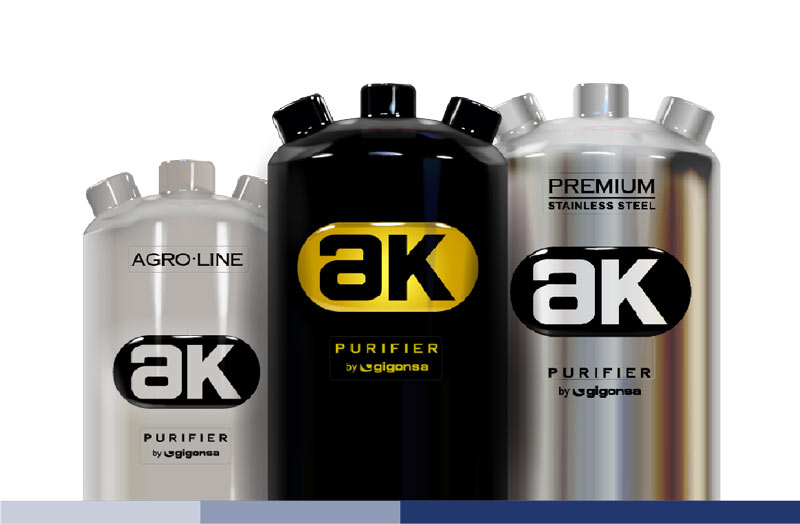
Diesel Fuel Water Separator Filters
Understanding why water is the worst enemy of modern diesel engines.
Read moreProtect Your Investment
The physics of HPCR engines are unforgiving, but the solution is simple physics. By removing water and particulates before they enter the fuel system, you aren’t just filtering diesel; you are insuring your asset.
Would you like to calculate the potential ROI of installing an AK Purifier on your specific fleet?
Contact Our Technical Team