For decades, the partnership between RAM and Cummins has set the gold standard for heavy-duty torque and towing capacity. Owning a “RAM motor”—specifically the legendary inline-six diesel—is often considered an investment in durability. However, the modern engineering landscape has introduced complexities that even the most robust engines cannot ignore. While the block itself remains bulletproof, the peripheral systems governing emissions and fuel delivery have become increasingly sensitive to contamination.
Key Insight for Fleet Managers
For fleet managers and independent operators, the difference between a million-mile engine and a catastrophic five-figure repair bill often comes down to fuel quality. This report delves into the engineering reality of the 6.7L platform, exposing the critical vulnerabilities in recent models and demonstrating how advanced purification technology by Gigonsa offers the only permanent solution for reliability.
The Heart of the Beast: Understanding the RAM Cummins 6.7L Architecture
To appreciate the necessity of advanced protection, one must first understand the sophistication of the machine in question. The 6.7L Cummins isn’t just a larger version of its predecessor; it is a completely different animal designed to meet stringent EPA requirements without sacrificing the torque RAM owners demand.
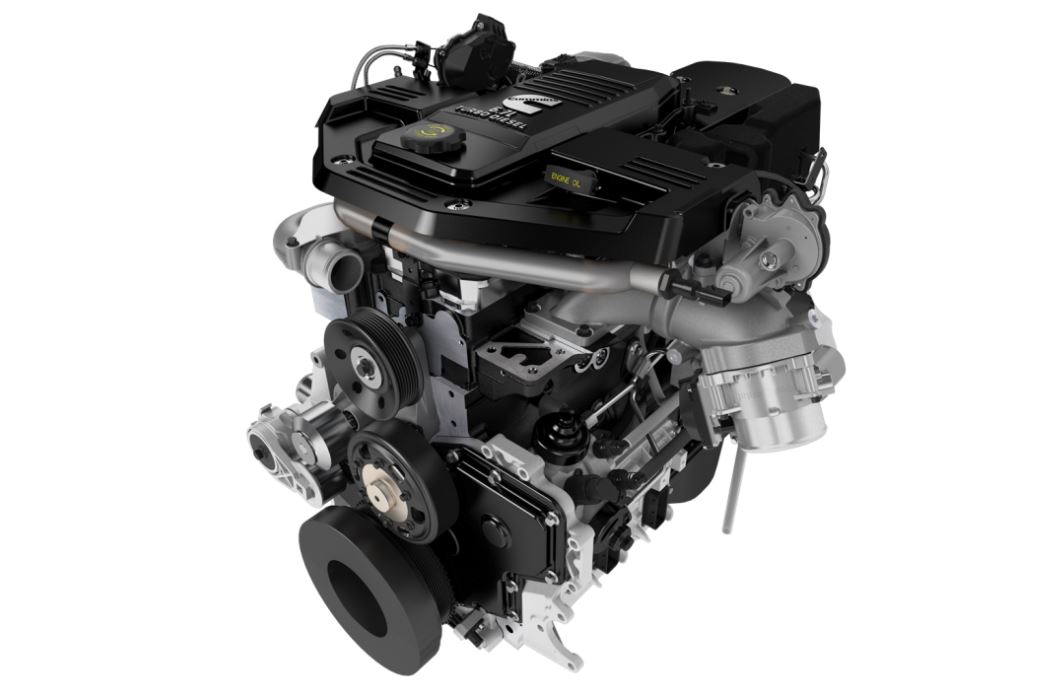
 The modern 6.7L platform is a marvel of engineering, but tight tolerances require pristine fuel quality.
The Evolution of the 6.7L Platform: From 2007.5 to Present Day
Introduced mid-year in 2007 (2007.5), the 6.7L Cummins represented a massive leap forward from the revered 5.9L engine. The bore and stroke were increased to 107mm x 124mm, providing greater displacement, but the primary driver for this evolution was emissions compliance. This generation introduced the Variable Geometry Turbocharger (VGT) and an integrated exhaust brake, features that revolutionized towing control.
However, this era also birthed the complexity of exhaust after-treatment systems, including Diesel Particulate Filters (DPF) and Exhaust Gas Recirculation (EGR). While these systems successfully reduce $NO_x$ and soot, they place a heavy load on the engine’s oil and fuel systems. The regeneration cycles required to clean the DPF often lead to fuel dilution in the oil—a phenomenon where unburnt diesel washes past the piston rings. If this dilution exceeds 5%, the viscosity of the oil drops, threatening main bearings. For a comparative perspective on how other manufacturers handle these pressures, you can review our analysis on GM Duramax engine protection.
Key Components: VGT Turbochargers and Common Rail Injection Systems
The true marvel of the modern RAM motor lies in its high-pressure common rail (HPCR) system. Unlike older mechanical injection systems, the modern Cummins 6.7L operates at pressures exceeding 29,000 PSI (2,000 bar). This immense pressure allows for multiple injection events per combustion cycle, resulting in quieter operation and immense power.
However, these pressures operate on incredibly tight tolerances—measured in microns. The Holset VGT turbocharger works in tandem with this fuel system to manage airflow and exhaust backpressure. When the fuel system is compromised, the combustion efficiency drops, leading to excessive soot that can jam the sliding nozzle ring of the VGT. Thus, the health of the turbo is inextricably linked to the purity of the fuel, creating an ecosystem where a single contaminant can trigger a cascade of failures.
The Critical Vulnerability: Why the 2019-2020 RAM Motors Face Catastrophic Failure
Despite the robust architecture, the 2019 and 2020 model years of the RAM 2500 and 3500 series introduced a vulnerability that has become infamous in the diesel community. In a bid to improve efficiency, the fuel injection pump was changed, leading to widespread reliability concerns that dealers often gloss over.
The Bosch CP4 Crisis: Analyzing the “Grenade Effect” in Fuel Systems
For the 2019 model year, RAM transitioned from the highly reliable Bosch CP3 injection pump to the Bosch CP4.2. While the CP4 is lighter and more efficient on paper, it has a fatal flaw when subjected to American diesel fuel standards or slight contamination.
The CP4 pump utilizes a cam and bucket design that relies entirely on the diesel fuel itself for lubrication. If the lubrication film breaks down—even for a microsecond—the metal cam begins to grind against the bucket. This friction generates metal shavings (aluminum and steel) that are instantly pumped at high pressure throughout the entire fuel system. This is known as the “Grenade Effect.” These shavings clog the injectors and return lines, effectively totaling the fuel system. Repairing this damage requires replacing everything from the tank to the injectors, often costing upwards of $10,000.
Water Contamination: The Silent Killer of RAM Fuel Injectors
What triggers the CP4 failure? Overwhelmingly, the culprit is water. Diesel fuel is hygroscopic, meaning it naturally absorbs moisture from the atmosphere. Additionally, condensation in storage tanks adds free water to the mix.
Water poses a dual threat. First, it has zero lubricity. When a slug of water hits a CP4 pump, the metal-on-metal contact occurs instantly. Second, at the molecular level, water reacts with the sulfur in diesel and the high pressures of the common rail system to create acidic conditions. This leads to internal galvanic corrosion of the injector pintles. For a deeper understanding of this chemical process, we recommend reading our article on why water is diesel’s worst enemy.
Beyond the Dealer: Advanced Maintenance for Industrial and Heavy-Duty Fleets
Standard maintenance schedules provided by the dealership are designed for “ideal conditions,” which rarely exist in the real world of construction, agriculture, or heavy transport. Relying solely on the factory fuel filter is a gamble that knowledgeable operators refuse to take.
Why Traditional 10-Micron Filters Fall Short of Full Protection
The factory filtration system on a RAM motor typically consists of a water separator and a final fuel filter. These are “barrier filters,” operating on the principle of size exclusion. They use a cellulose or synthetic media to trap particles larger than a certain size (usually 3 to 10 microns).
However, barrier filters suffer from inherent physical limitations. As they trap contaminants, flow restriction increases, stressing the lift pump. More critically, under high-pressure flow, water can be emulsified—broken into microscopic droplets that pass right through standard filter media. Once this emulsified water reaches the high-pressure pump, the damage is done. To explore the mechanics of this limitation, consult our guide on centrifugal filtration vs. traditional filters.
| Feature | Standard Barrier Filter | Gigonsa AK Purifier |
|---|---|---|
| Filtration Principle | Size Exclusion (Physical Barrier) | Centrifugal Force & Differential Density |
| Water Removal | Limited (often passes emulsified water) | 99% Removal (Free & Emulsified) |
| Maintenance Cost | High (Replacement cartridges required) | Zero (No replacement parts, just purge) |
| Flow Restriction | Increases as filter clogs | Constant flow, no restriction |
Centrifugal Purification vs. Standard Filtration: A Comparative Analysis
At Gigonsa, we approach fuel cleanliness through physics rather than simple blockage. The AK Purifier utilizes centrifugal force and differential density to separate contaminants. Unlike a filter that holds dirt until it clogs, our system expels it.
The efficiency of our separation process can be modeled using a variation of Stokes’ Law, which describes the settling velocity of particles in a fluid. By inducing a rotational flow, we amplify the gravitational force acting on the contaminants:
Where:
$v$ is the sedimentation velocity of the contaminant.
$\rho_p$ is the density of the particle (water or sediment).
$\rho_f$ is the density of the diesel fuel.
$\mu$ is the dynamic viscosity of the diesel.
$g$ represents the centrifugal acceleration generated by the AK Purifier’s design.
Because water and solid sediments ($\rho_p$) are significantly denser than diesel ($\rho_f$), the centrifugal force pushes them to the outer wall of the unit where they settle into a collection bowl, completely separated from the fuel stream. This allows the clean, lighter diesel to flow to the engine without restriction.
The AK Purifier Advantage: Extending Your RAM Motor’s Life to 15+ Years
For a RAM owner, installing an AK Purifier is not an accessory; it is an insurance policy for the engine’s longevity. By placing this technology between the tank and the engine, you effectively immunize the vulnerable CP4 pump against its primary weakness.
Elimination of 99% of Water and Sediments without Replacement Parts
The AK Purifier is engineered to remove 99% of water (both free and emulsified) and solid particulates down to levels that exceed OEM specifications. However, the economic advantage lies in its operational design.
Note: Unlike factory filters that require replacement every 15,000 miles, the AK Purifier has no moving parts and no replaceable elements.
Whether you choose our Premium Line (Stainless Steel, Lifetime Warranty) or our Classic Line (Carbon Steel, 7-Year Warranty), the maintenance is identical: simply open the purge valve at the bottom of the unit to drain the collected contaminants. This “install and forget” reliability aligns perfectly with the Gigonsa mission to protect client assets while minimizing downtime.
Case Studies: Maximizing Performance in Construction and Transport Sectores
We have deployed this technology across more than 25 countries, protecting engines in the harshest environments. In the construction sector, where machinery is fueled from dusty onsite tanks, the AK Purifier has reduced fuel-system related downtime by over 80%.
For transport fleets utilizing the RAM 3500 platform for hot-shot trucking, the results are equally impressive. One fleet partner reported a complete cessation of injector failures over a 500,000-mile period after retrofitting their units with AK Purifiers. By ensuring that the fuel entering the DPF regeneration cycle is clean, we also assist in maintaining oil viscosity, further protecting the engine bearings.
Diagnostic Checklist: Recognizing Early Signs of Fuel System Degradation
While prevention is key, recognizing the early symptoms of failure can save a RAM motor from total destruction.
Interpreting Diagnostic Trouble Codes (DTC) for Fuel Pressure
Modern RAM trucks are equipped with sophisticated sensors that monitor rail pressure. If you encounter the following codes, immediate action is required:
- P0087: Fuel Rail Pressure Too Low. This is often the first sign that the CP4 pump is struggling to build pressure due to internal wear.
- P0191: Fuel Rail Pressure Sensor Circuit Range/Performance.
- P1011: Fuel Pump Delivery Pressure Too Low.
These codes suggest that the fuel control actuator (FCA) is maxed out trying to compensate for a lack of pressure, often caused by pump degradation. For a detailed list of warning signs, refer to our 5 indicators of contaminated fuel.
Visual Inspections: Finding Metal Shavings Before the Engine Quits
If you suspect contamination, perform the “Glitter Test.” Remove the fuel filter cap in the engine bay and inspect the bottom of the housing and the filter pleats.
- The Look: If you see tiny, shiny flakes that look like aluminum or silver glitter, your CP4 pump has likely already failed.
- The Action: Do not start the engine. Tow the vehicle immediately.
However, with an AK Purifier installed, you can visually inspect the clear collection bowl (on applicable models) or purge the unit to see exactly what contaminants were stopped before they reached your factory filter.
Future-Proofing Your Investment in the RAM Diesel Platform
The RAM 6.7L Cummins is a marvel of torque and capability, but it is not invincible. The engineering trade-offs made to meet emissions standards have created a fuel system that demands purity levels that standard gas station diesel simply cannot guarantee.
Waiting for a warning light is a strategy that often ends in a repair bill exceeding the value of the truck. The AK Purifier by Gigonsa offers a proactive, permanent engineering solution. By leveraging centrifugal force to eliminate the water and sediment that destroy high-pressure pumps, we don’t just filter fuel; we extend the operational life of your engine to 15+ years.
Protect your motor. Maximize your performance.
Contact Our Engineering TeamRelated Articles

Extend Diesel Engine Life to 15+ Years
Discover how proper fuel purification can significantly extend the operational life of your diesel assets.
Read More →
Centrifugal vs. Traditional Filters
Understand the physics behind why traditional barrier filters fail to stop emulsified water and microscopic particles.
Read More →
GM Duramax Engine Protection
Compare how other heavy-duty platforms handle fuel contamination and what you can learn from them.
Read More →